Jebel Faya: 210,000 Years of History & How to Visit
Jebel Faya is a limestone ridge in Sharjah’s central region where archaeologists have uncovered stone tools left by people who lived there between 210,000 and 120,000 years ago. In July 2025, UNESCO inscribed the surrounding Faya Palaeolandscape on the World Heritage List, the first desert Palaeolithic site to appear on it.
The ridge is a protected research area, so a visit works differently from most Sharjah attractions. You book a guided experience through the Mleiha Archaeological Centre instead of driving up to the rock shelter yourself.
Jebel Faya quick details
| Detail | Information |
|---|---|
| Location | Al Faya, central Sharjah, about 50 minutes east of Sharjah city |
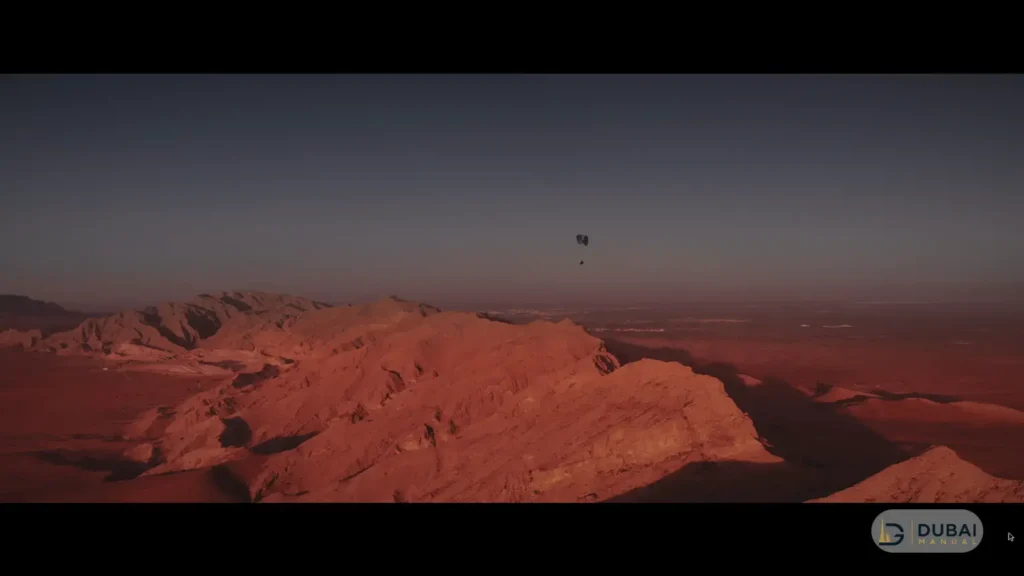
| What it is | Limestone ridge, about 10 km long and 2 km wide, with a Stone Age excavation record |
| Occupation record | 210,000 to 6,000 years ago across the Faya Palaeolandscape |
| UNESCO status | Faya Palaeolandscape, inscribed July 2025 under criteria (iii) and (iv) |
| Protected area | 29,085 hectares, plus a 65,841-hectare buffer zone |
| Managed by | Sharjah Archaeology Authority |
| Visitor access | Guided visits through the Mleiha Archaeological Centre |
Why Jebel Faya matters
Jebel Faya shows that people lived in southeast Arabia repeatedly over more than 100,000 years rather than passing through it once. The evidence supports a southern route out of Africa into Arabia, which shifted the debate away from earlier theories that favoured a northern route.
Three findings carry most of the weight:
- Excavations in 2009 dated human occupation to 125,000 years ago, which made Jebel Faya the oldest known human site in Arabia at the time.
- Dating work later reconstructed four phases of occupation between 210,000 and 120,000 years ago, and showed that people used the rock shelter in both dry and wetter climate phases.
- Stone tools about 80,000 years old link human presence to Marine Isotope Stage 5a, when Indian Ocean monsoons turned Arabia’s deserts into grasslands with lakes.
Those later tools were made by bidirectional reduction, which means striking both ends of a stone core to produce long blades and flakes. The method needs planning, and it saved raw stone for later use.
The landscape people lived in
The climate around Faya swung between dry and wet phases roughly every 20,000 years. When the first people arrived, the landscape was greener, with water running through wadi channels that supported plants and animals. Later hyper-arid periods did not empty it, and people kept returning.
The area offered diverse water sources and raw materials, and the local geology supplied stone for tools. UNESCO describes Faya as an inhabited desert landscape, and the layers record how hunter-gatherers and later herders adapted to each swing.
What archaeologists found
The Faya landscape has produced a large and unusually continuous record:
- More than 35,000 stone artefacts
- 18 phases of prehistoric occupation
- Seven excavated archaeological sites
- Over 50 peer-reviewed scientific publications
More than 150 square metres have been excavated at the site, and the sequence shows people returning across climate swings. Teams from the Sharjah Archaeology Authority, the University of Tübingen, the University of Freiburg and Oxford Brookes University have worked on it.
Research milestones
| Year | Milestone |
|---|---|
| 1980s | A French team test-excavates site FAY-NE1 during fieldwork in Sharjah |
| 2003 | Systematic excavations begin under a joint Sharjah Archaeology Authority and Tübingen project |
| 2009 | Excavations date human occupation to 125,000 years ago |
| 2025 | UNESCO inscribes the Faya Palaeolandscape in July |
The UNESCO listing
The World Heritage Committee inscribed the Faya Palaeolandscape at its 47th session in Paris in July 2025. It is the UAE’s second World Heritage site, after the Cultural Sites of Al Ain in 2011.
The listing covers the whole landscape rather than the ridge alone, so it also takes in the Buhais area. Jebel Faya is the best-known part. UNESCO’s human evolution programme (HEADS) has included Faya for over a decade, alongside Klasies River Caves and Wonderwerk Cave.
A 2024 to 2030 management plan governs research, sustainable tourism and community education, including how visitors reach the core area.
Can you visit Jebel Faya?
Yes, through guided visits organised by the Mleiha Archaeological Centre, which is the main gateway to the area. Independent access to the core archaeological area is limited, so the way to see Faya is to start at the centre.
Guided visits cover the archaeology, geology and environmental history of the landscape, and sensitive areas stay closed. The centre sits on the eastern side of the Faya range, and some of the stone tools recovered from Faya are displayed inside it.
The centre opened in January 2016 and is built around a Bronze Age Umm an-Nar tomb. Inside are a museum with multimedia displays and information panels, and a café.
Tours from the centre
- Valley of the Caves tour, which visits ancient caves once lived in by Neolithic people
- ArchaeoMOG tour, a Unimog ride from the museum past the stables and gazelle enclosures to the Valley of the Caves
- Archaeological tour, a guided visit to pre-Islamic and Neolithic sites that starts at the centre
Tours named for Fossil Rock go to a different landmark in Mleiha, so choose one of the three above for the Faya area. You can book a guided tour online before you go, and prices vary by tour.
Centre opening hours
| Day | Hours |
|---|---|
| Sunday to Wednesday | 09:00 to 19:00 |
| Thursday to Saturday | 09:00 to 21:00 |
See Jebel Faya online
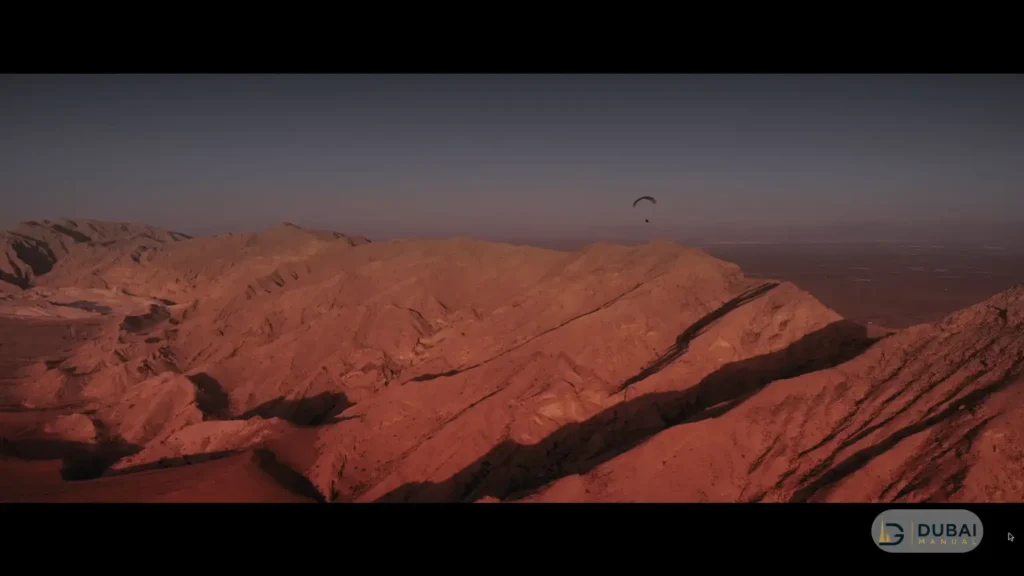
The Sharjah Archaeology Authority has put 14 online site models of Jebel Faya on its website. They include a drone model of the ridge, the palaeo excavation site and valley, caves and tombs.
How to get there
By car
The Faya area is about 50 minutes east of Sharjah city, near Al Madam, and the centre sits on the Maleha Road (E55). A normal car is enough to reach the centre, because tours run in the centre’s own vehicles.
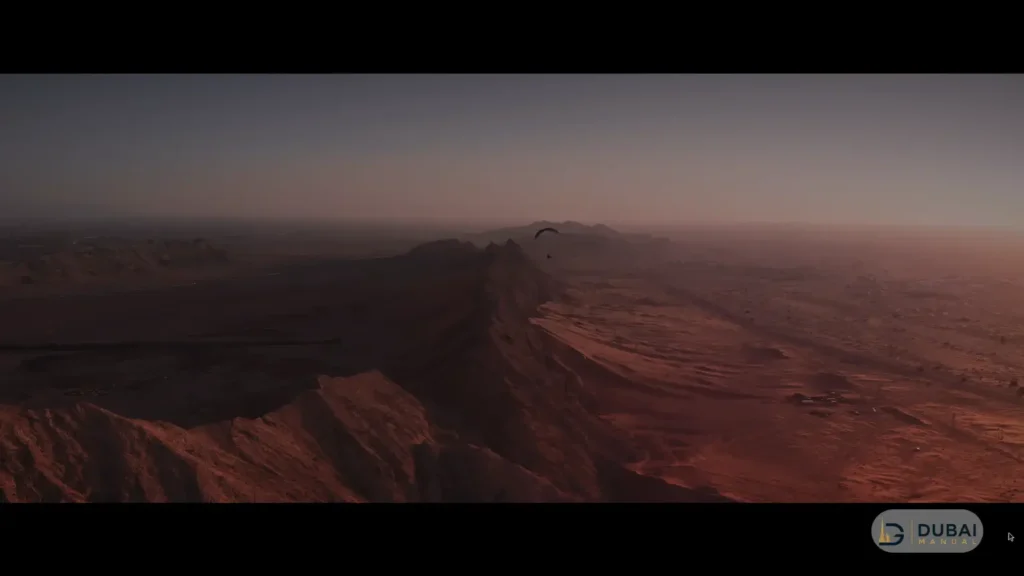
The landscape lies between the Rub’ al Khali dunes to the west and the Al Madam plain to the east, along the foothills of the Hajar Mountains.
On a tour with hotel pickup
Guided Mleiha tours with pickup from central Dubai hotels are also available, which suits visitors without a car. For centre enquiries, call +971 6 802 1111.
What else is nearby
The centre is the base for the wider Mleiha area:
- Fossil Rock and Camel Rock, two rock landmarks with their own tours
- Sky adventures, stargazing and horse riding from the centre
- Moon Retreat, a desert glamping camp among the dunes
- The sand-buried Al Madam village, an abandoned settlement on the same plain
- The Buhais Geology visitor centre, which covers Jebel Buhais, another part of the inscribed landscape
Visitor tips
- Visit between November and March. The open-air stops are comfortable then, and the desert heat is hard on guided walks in summer.
- Carry water, a hat and closed shoes for the caves and desert tracks.
- Stay on the guided route. The site is protected under Sharjah law, so leave every stone where it lies.
FAQ
Is Jebel Faya open to the public?
Yes, but only through guided visits organised by the Mleiha Archaeological Centre. Independent access to the core archaeological area is limited.
Where is Jebel Faya?
Jebel Faya is in Al Faya, in Sharjah’s central region, about 50 minutes east of Sharjah city and near Al Madam.
How old is Jebel Faya?
Human occupation at the rock shelter dates from about 210,000 years ago. Excavations have recorded 18 phases of prehistoric occupation across the wider landscape.
Is Jebel Faya a UNESCO World Heritage Site?
Yes. UNESCO inscribed the Faya Palaeolandscape, which includes Jebel Faya, in July 2025. It is the UAE’s second World Heritage site.
Do you need a 4×4 to visit Jebel Faya?
No. A normal car reaches the Mleiha Archaeological Centre, and the guided tours use the centre’s vehicles.
How is Jebel Faya different from Mleiha?
Jebel Faya is the ridge and research site. Mleiha is the surrounding area and visitor base where the tours start.
Before you go
- Book a guided experience with the Mleiha Archaeological Centre instead of driving to the ridge.
- Plan around the centre’s hours, which run until 9 PM from Thursday to Saturday.
- Choose the Valley of the Caves tour or the archaeological tour for the Faya area.
- Look through the online site models first, so you know which sites you want to see.