
Sharjah City: Heritage, Museums, Beaches & Travel Tips

Sharjah city is the capital of Sharjah emirate in the United Arab Emirates. It sits next to Dubai and combines heritage districts, waterfront promenades, beaches, and museums with a more traditional public atmosphere. For a stay, a day trip, or a broader UAE itinerary, it gives you culture, access, and a slower pace than many nearby destinations.
Key facts about Sharjah city
| Fact | Value |
|---|---|
| Capital | Sharjah emirate |
| Country | United Arab Emirates |
| Area | 235.5 km² |
| Population | 1.6 million–1.8 million |
| Emirate area | 2,590 sq km |
| UAE area share | 3.3% |
| Coastline | 20 km |
| Geographic position | Arabian Gulf and Gulf of Oman |
| Population in the emirate | About 1.8 million |
| Emirati citizens | 208,000 |
| Expatriate residents | 1.6 million |
| GDP in 2023 | AED 145.2 billion |
| Non-oil GDP in 2023 | AED 142.5 billion |
| UAE GDP share | 7.4% |
| Cultural titles | 5 titles |
| Heritage importance | Nearly 25% of UAE museums |
What Sharjah city is known for
Sharjah city is known for heritage, museums, family outings, and a public atmosphere shaped by Islamic traditions. Museums, heritage districts, waterfronts, and book and arts institutions give the city most of its identity.
It also holds five major cultural titles and is home to nearly a quarter of UAE museums.
Sharjah is known for its cultural landmarks, but its coastline is just as much a part of the draw. Travelers can pair museums and heritage sites with time by the water, and a trip to Khorfakkan Beach adds a more scenic seaside stop to a Sharjah visit.
Top places to visit
- Heart of Sharjah for restored alleyways, coral-stone houses, and traditional souqs.
- Sharjah Museum of Islamic Civilization for manuscripts, artefacts, and scientific instruments spanning 1,400 years.
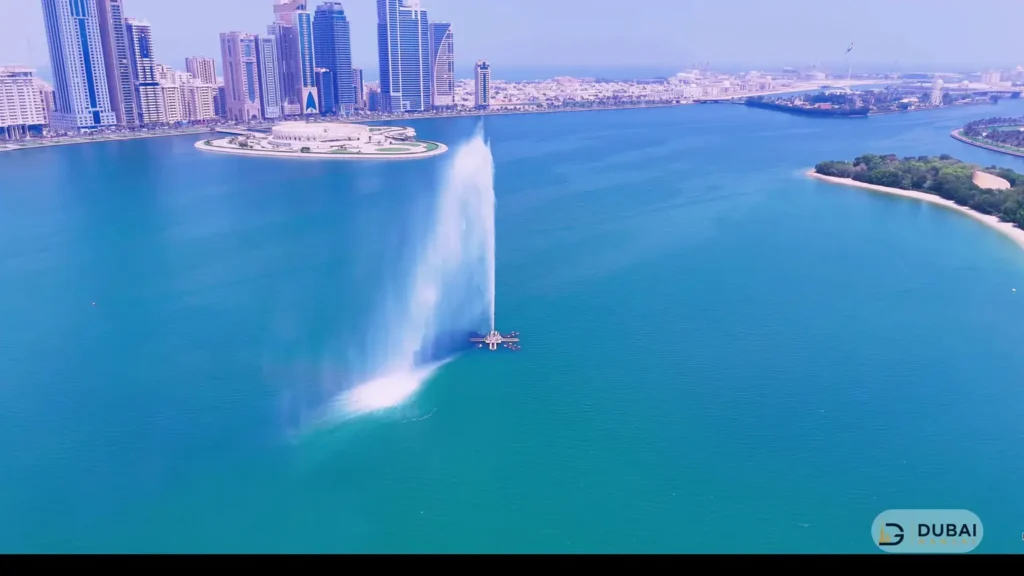
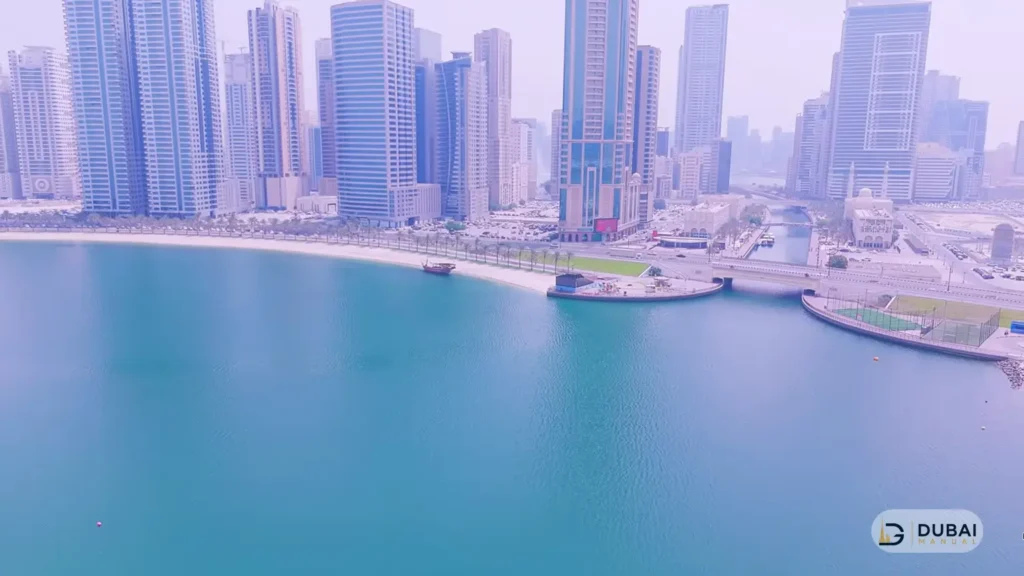
- Al Majaz Waterfront for lagoon views, evening walks, dining, and the fountain area.
- Khalid Lagoon for green spaces, walking tracks, restaurants, and the Sharjah Fountain light-and-water show.
- Al Khan Beach for swimming, kayaking, surfing, and family outings.
- Expo Centre Sharjah for trade fairs and major events.
Heart of Sharjah and the museum district are the strongest choices for culture. Al Majaz Waterfront and Khalid Lagoon suit easy evenings and open-air dining, while Al Khan Beach is the main urban beach option if you want time by the sea.
The heritage and museum areas give Sharjah more depth than a single landmark. A slower plan works well here, with one morning for history and one evening on the waterfront.
Sharjah’s heritage feel comes through most clearly in its old market areas, where restored buildings, small courtyards and local crafts still shape the experience. After walking through the souks, you can continue to another heritage
shopping stop such as Souq Al Arsah market, where the old
trading atmosphere is part of the appeal.
Best areas to stay and explore
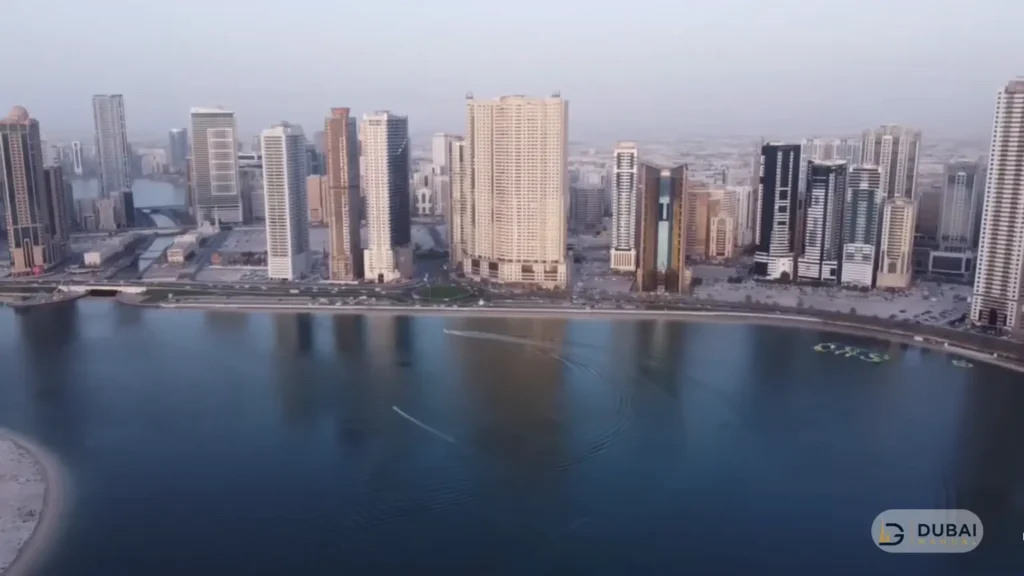
- Al Majaz and Buhaira Corniche for waterfront walks, restaurants, and easy access to Khalid Lagoon.
- Heart of Sharjah for heritage stays, old-city character, and close access to cultural sights.
- Al Khan for beach access and a straightforward family base near the shoreline.
- City centre Sharjah for practical access to shopping, transport, and everyday services.
Al Majaz is often the easiest area for first-time visitors because it combines views, food, and public space in one compact zone. The Buhaira Corniche side works especially well if you want evening movement near the lagoon and easy access to central roads.
Heart of Sharjah suits travellers who care more about atmosphere and heritage access. Al Khan works well for a beach-focused stay, while the city centre is practical for short business trips and simple transport access.
How to get around Sharjah
- Fly into Sharjah International Airport if you want the city’s primary airport and the main hub for Air Arabia.
- Use Dubai International Airport if it better fits your flight schedule, then continue by road into Sharjah.
- Take a taxi for direct point-to-point travel inside the city, especially if you are moving between the airport, the waterfront, and the heritage district.
- Use buses for cheaper travel on common urban routes and for cross-emirate movement.
- Drive if you want the simplest access to coastal areas, the eastern towns, or desert locations such as Al Badayer.
Sharjah International Airport is the most direct arrival point for the city, but Dubai International Airport is also a common gateway because it sits about 20 to 30 minutes away by traffic-dependent road transfer. That makes Sharjah easy to reach even when your trip starts in Dubai. The border with Dubai also helps if you are staying in one emirate and sightseeing in the other.
Sharjah’s road links are strong, including the route southwest toward Abu Dhabi on Sheikh Zayed Road and E11. Taxis are the most convenient option for short stays, while buses and self-driving are better for visitors who want to cover several districts.
Rules and etiquette to know
- Dress modestly in public places.
- Avoid public behaviour that would be considered overly loud or disrespectful.
- Be careful with photography near people, government buildings, and sensitive sites.
- Do not assume nightlife, alcohol service, or beach behaviour will match Dubai’s norms.
- During Ramadan, keep daytime public behaviour respectful and low-key.
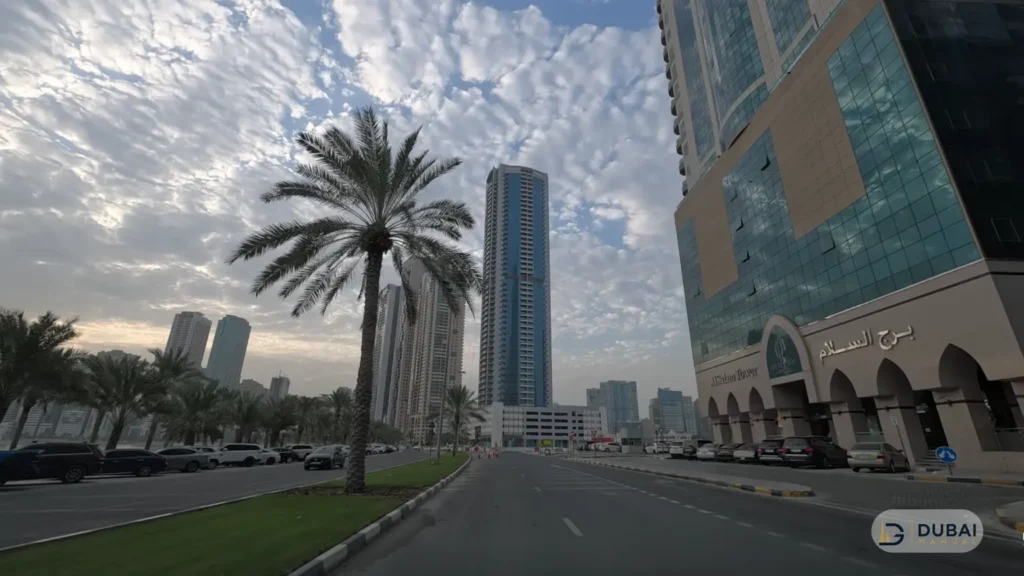
Sharjah’s cultural tone is more traditional than Dubai’s, so modest clothing and respectful public behaviour matter in waterfront areas, museums, and family spaces.
These expectations are part of Sharjah’s identity, which centres on public decency, museum visits, and family use of shared spaces.
Why Sharjah matters culturally
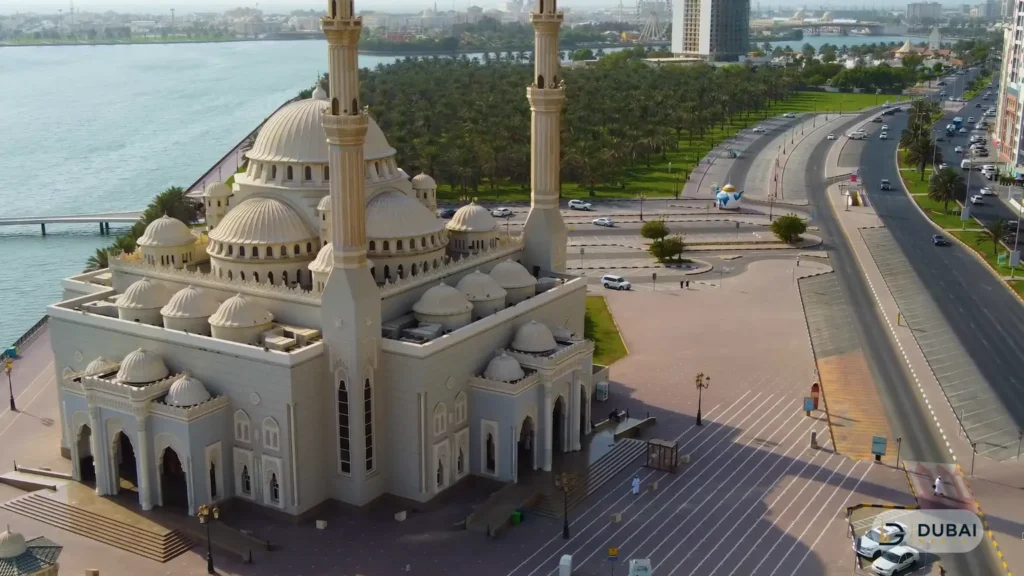
Sharjah matters because it has turned cultural preservation into a city-wide identity. It was named Cultural Capital of the Arab World in 1998, Capital of Islamic Culture in 2014, Arab Tourism Capital in 2015, Capital of Arab Press in 2016, and World Book Capital in 2019.
The museum landscape is especially strong. Sharjah is home to nearly a quarter of all UAE museums, and the Sharjah Museum of Islamic Civilization is one of the clearest examples of that depth. Heart of Sharjah reinforces the same story by preserving older urban forms instead of replacing them with modern spectacle.
Trip planning tips
- Choose Al Majaz if you want the easiest mix of dining, walking, and water views.
- Choose Heart of Sharjah if culture and architecture matter most.
- Choose Al Khan if your priority is a beach stay.
- Use Sharjah International Airport for the most direct city arrival.
- Use Dubai International Airport if flight timing or price is better, then transfer by road.
- Plan around the city’s stricter public traditions if you are combining Sharjah with Dubai in one trip.
The most efficient Sharjah trip usually combines one cultural zone and one leisure zone. A common pairing is a heritage morning in Heart of Sharjah and an evening at Al Majaz or Khalid Lagoon. If you have more time, add Al Khan Beach for a relaxed coastal stop.
Sharjah also works well as part of a broader UAE itinerary because it borders Dubai directly and sits within easy driving distance of Abu Dhabi. Booking decisions usually come down to airport convenience, hotel location, and how much beach or heritage time you want.
FAQs
Is Sharjah city part of Dubai?
No. Sharjah city is the capital of the Emirate of Sharjah, which borders Dubai directly. They are separate emirates with different local rules and a different public atmosphere.
What is Sharjah city best known for?
It is best known for museums, heritage districts, family-friendly waterfronts, and a more traditional cultural setting. It also stands out for its strong book and arts identity.
Which airport is best for Sharjah city?
Sharjah International Airport is the most direct option and the city’s main airport. Dubai International Airport is also practical because it is only about 20 to 30 minutes away by road, depending on traffic.
How long should you spend in Sharjah city?
A single day is enough for a highlights visit, but one to two nights gives you time for the heritage district, a museum, and the waterfront. Longer stays make sense if you want a beach day or want to explore nearby towns such as Khorfakkan or Kalba.
Is Sharjah city family-friendly?
Yes. The city has family-focused public spaces, beaches, museums, and waterfront promenades. Its calmer pace and stricter public etiquette also suit many families well.
Can you visit Sharjah city from Dubai in one day?
Yes. Dubai and Sharjah are directly adjacent, so a day trip is straightforward by car or taxi. The most practical one-day plan is usually a heritage stop, a museum visit, and an evening at the lagoon or waterfront.
What is the most important cultural site in Sharjah city?
Heart of Sharjah is one of the most important heritage areas, while the Sharjah Museum of Islamic Civilization is the standout museum stop. Together they show the city’s main cultural identity clearly.
Conclusion
Sharjah city is the UAE choice for travellers who want heritage, museums, beaches, and a calmer public mood in one place. If you plan around Al Majaz, Heart of Sharjah, Al Khan, and the main airport links, you can cover the city efficiently and still leave room for slower sightseeing.





5 Comments
Comments are closed.