Kalba Ice Factory: Exhibitions, History & How to Visit

Kalba Ice Factory started life in the 1970s making fish feed and storing ice for local fishermen. Today the same concrete halls hold large-scale art installations on the edge of a mangrove reserve. The catch for visitors is simple: the doors open when an exhibition is on, and stay shut between shows. Plan around the programme, not around fixed opening hours, and the visit makes sense.
Kalba Ice Factory quick details
| Detail | Value |
|---|---|
| Location | Kalba, Sharjah, beside Khor Kalba |
| Original use | Fish feed mill and ice storage, built in the 1970s |
| Reopened to the public | 8 February 2023, for Sharjah Biennial 15 |
| Operator | Sharjah Art Foundation |
| Building size | 20,000 square metres |
| Access | During exhibitions only |
| Venue hire | Spaces from 146 to 667 square metres, capacity 200 to 400 |
| On site | Fen Café, a 200 square metre workshop, apartments and social spaces |
Can you visit right now
You can visit only while an exhibition is running. Visit Sharjah states plainly that Kalba Ice Factory is open for visitors only during exhibitions, and there is no standing daily schedule to fall back on between shows.
The last listed exhibition, Of Land and Water, a presentation of large-scale works from the Sharjah Art Foundation Collection, ran until 31 May 2026. The next announced window is Sharjah Biennial 17, running 21 January to 13 June 2027, with Kalba Ice Factory named among its venues across Sharjah, Al Dhaid, Kalba and Khorfakkan. Between those windows, treat the building as closed to walk-in visitors and check the Foundation’s current programme before setting out. Sharjah Biennial exhibitions staged here are free to enter.
From fish feed mill to art venue
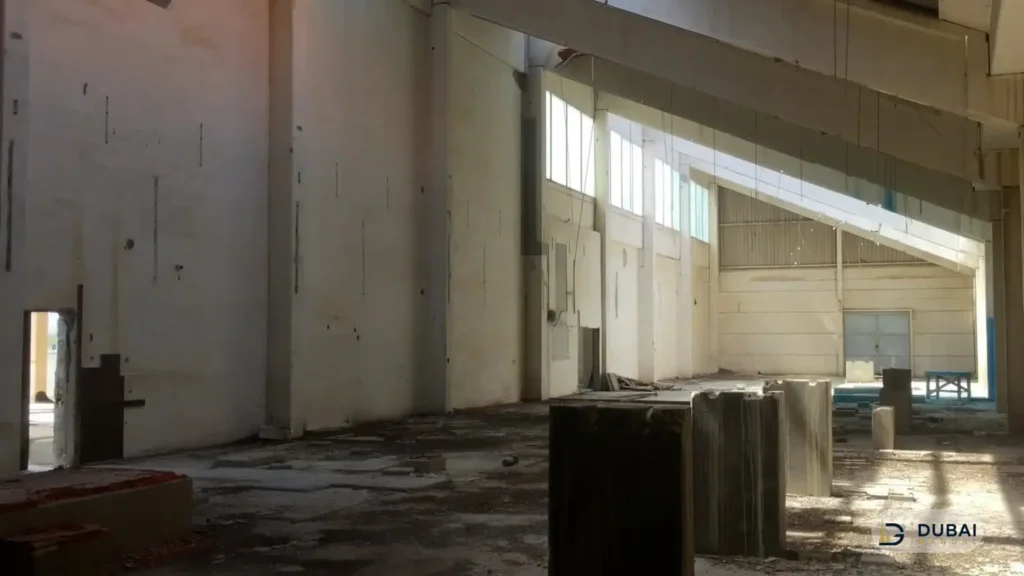
The building was constructed in the 1970s as a fish feed mill, then used as an ice production and storage facility by local fishermen. Ice mattered because it let fish caught off Kalba’s coastline reach Dubai for sale. When that trade faded, the building fell into dereliction.
Sharjah Art Foundation bought the shell of the building in 2015. The venue was already in use before any renovation: Argentinian sculptor Adrián Villar Rojas showed Planetarium there during Sharjah Biennial 12 in 2015, and South African filmmaker Mohau Modisakeng staged the performance Land of Zanj there during Sharjah Biennial 14 in 2019. Peruvian architects 51-1 Arquitectos were commissioned in 2017 to turn the derelict buildings into a permanent art space, construction started in 2020, and the restored building opened to the public on 8 February 2023, timed to house Sharjah Biennial 15.
What the renovation kept
The renovation preserved the building’s original industrial architecture with minimal intrusions, rather than rebuilding it as a conventional gallery. The most visible survivor is the corrugated metal roof with its saw-tooth profile, which still gives the long halls their factory silhouette.
High windows flood those halls with natural light, which is part of why the space suits works at a scale that white-cube galleries struggle to hold. The 20,000 square metre complex also holds six apartments, social spaces and a 200 square metre workshop, plus a branch of the Foundation’s Fen Café. The result reads as a working building adapted for art, not a new building dressed up as an old one.
What happens inside
Large-scale installations and experimental projects are the core of the programme, and the halls were adapted specifically for work of that size. Performances, lectures and film screenings use the same spaces, and the striking industrial backdrop makes the venue a regular choice for photo shoots and film productions.
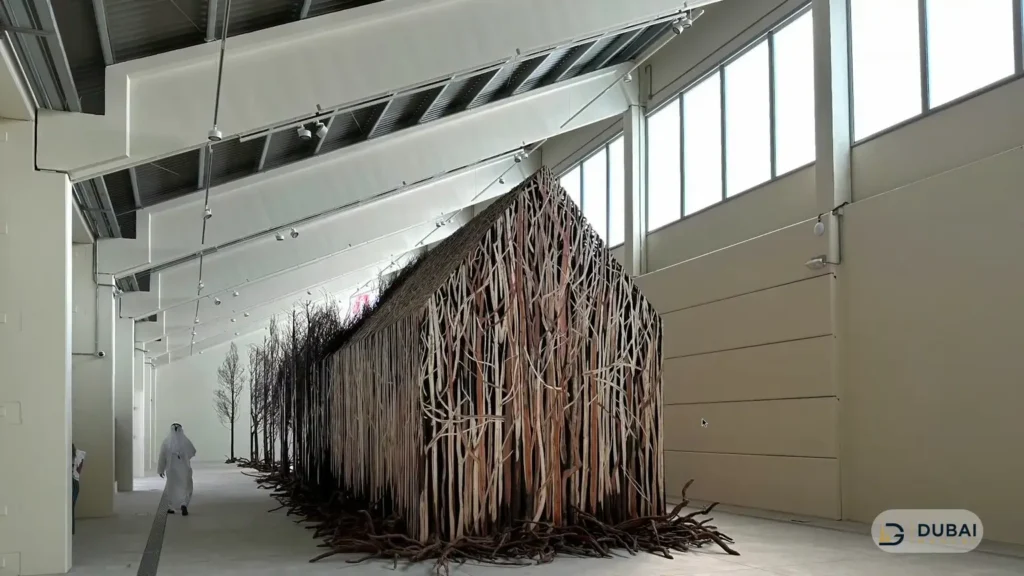
Community use runs alongside the exhibition programme. The workshop, social spaces and learning activity give the building a second life between major shows, even when the exhibition halls themselves are closed. That mix is deliberate: Sharjah Art Foundation presents the factory as a gathering space for Kalba residents as well as visitors from across the emirate.
The creek & mangrove setting
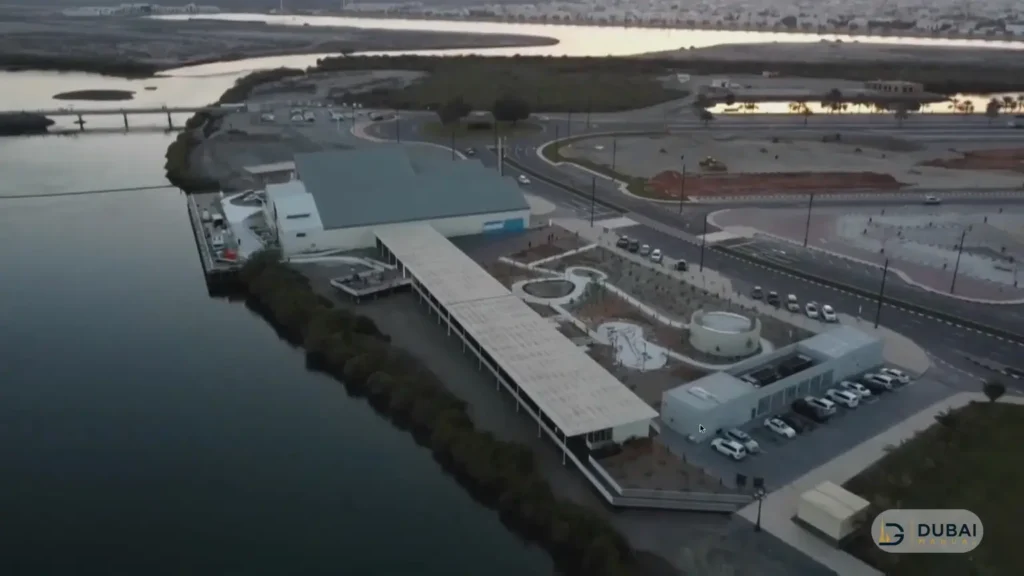
Kalba Ice Factory stands beside Khor Kalba, the creek that gives the town its edge, and overlooks the Al Qurm Nature Reserve. The reserve is a mangrove and wildlife sanctuary, and its biodiversity is part of the reason the site stands out among Sharjah’s art venues.
The reserve shelters endangered species including the Arabian collared kingfisher and Blandford’s lizard, and hawksbill and green turtles nest on the nearby beach. A visit pairs naturally with time on the creek edge: the factory’s concrete halls and the mangroves outside belong together, and the setting is half the reason to come.
Hiring the venue
The venue is available for private hire through Sharjah Art Foundation’s venue hire team. Hireable spaces range from 146 to 667 square metres, with capacity varying from 200 to 400 people depending on the space and layout.
The Foundation lists the venue as ideal for large-scale lectures, performances and film screenings, and the industrial backdrop is part of the offer for photo shoots and film productions. On-site facilities include Wi-Fi, car parking, an EV charger, a skylight, a mosque and washrooms. Anyone planning an event should confirm the specific space and layout with the hire team, since capacity shifts with the configuration.
Getting there
Kalba Ice Factory sits in Kalba on Sharjah’s east coast, at E 99 in Algurm, beside the creek and the mangrove reserve. Use the Kalba Ice Factory map pin to navigate to the site; the plus code is 2986+JM8. Car parking is available on site.
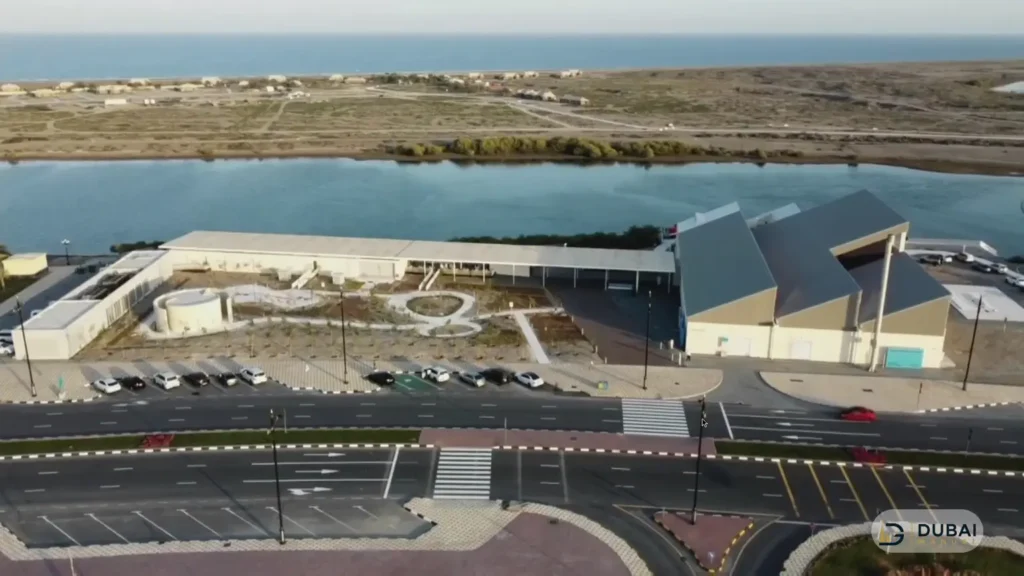
Kalba itself is a small coastal town, so the factory is easy to find once you reach the creek road. There is no metro or public transport link that drops visitors at the door, and driving is the practical way in. Pair the trip with the creek edge rather than treating the factory as a quick stop: if no exhibition is on, the building will not be open, and the drive is better spent when the programme gives you something to walk into.
Planning the visit
Work through the programme first, then the logistics. The order matters because the exhibition calendar decides whether the trip works at all.
- Pick a show from the Foundation’s current programme and note its dates. The venue has no standing hours outside exhibition runs.
- Allow half a day for Kalba, not an hour. The halls reward slow looking, and the creek edge deserves time after you come out.
- Stop at Fen Café while you are there. It sits inside the complex, so it needs no separate trip.
- Park on site. The venue lists car parking among its facilities, so there is no need to hunt for street parking in town.
- If the programme shows nothing on, hold the trip for the next window. Sharjah Biennial 17 is the next announced one, and arriving for a show beats arriving for closed doors.
FAQ
Is Kalba Ice Factory open every day?
No. The venue is open for visitors only during exhibitions. Between shows the halls are closed to walk-in visitors, so check the current programme before travelling.
Is entry free?
Sharjah Biennial exhibitions staged at the venue are free to enter. Private hire and special events operate on separate arrangements.
Where is Kalba Ice Factory?
In Kalba, Sharjah, beside Khor Kalba and overlooking the Al Qurm Nature Reserve, at E 99 in Algurm.
What was the building before it was an art venue?
A fish feed mill built in the 1970s, later used as an ice production and storage facility by local fishermen. Sharjah Art Foundation bought the shell in 2015 and restored it as a permanent art space.
Can I hire Kalba Ice Factory for an event?
Yes. Hireable spaces range from 146 to 667 square metres with capacity from 200 to 400 people, and the venue suits lectures, performances, film screenings, photo shoots and film productions.
Worth the detour
Kalba Ice Factory rewards one specific kind of planning: pick an exhibition first, then build the trip around it. The building itself carries the story, from fish feed mill to Biennial venue, and the mangrove creek beside it supplies the setting no gallery interior can. Arrive during a show, and a derelict factory on Sharjah’s east coast becomes one of the most distinctive art spaces in the emirate. Arrive between shows, and you will find closed doors beside a very photogenic creek. The programme is the difference, so let it set the date.