Wadi Al Helo: Heritage Village, Hiking & Bronze Age Copper Site
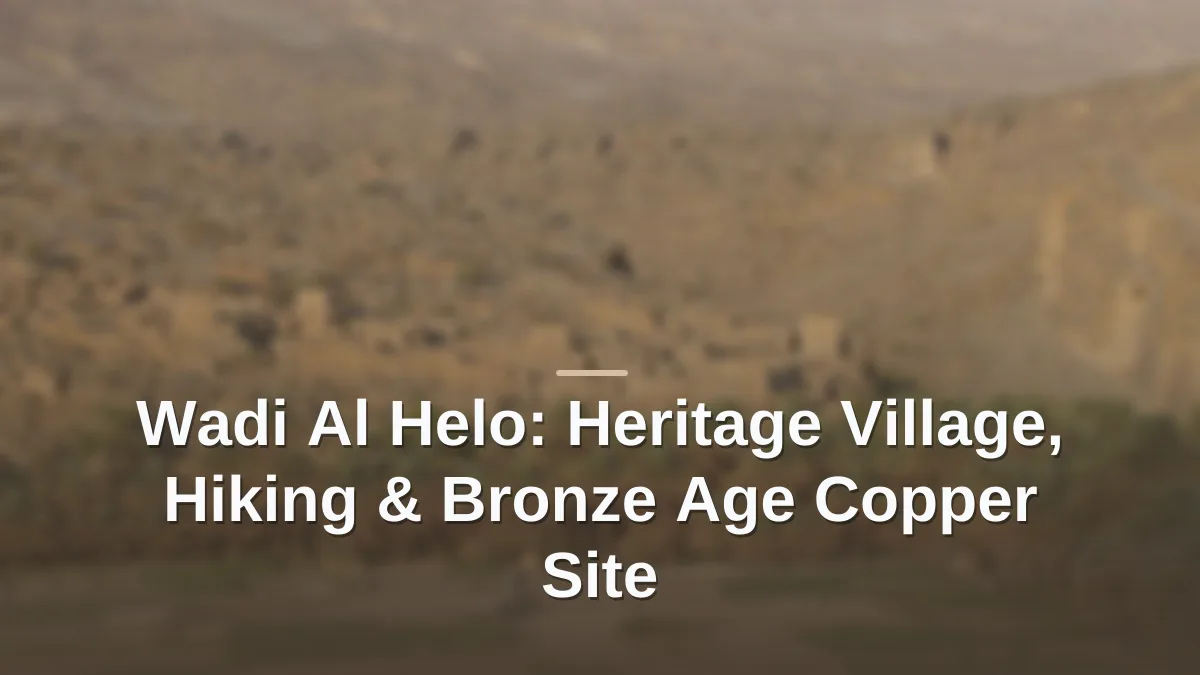
Wadi Al Helo joined ISESCO’s Islamic World Heritage List in February 2026 as a witness to Bronze Age copper mining. Smelters here cast copper that was close to pure, and a 19th-century tobacco village left stone farmhouses and watchtowers on the hills above the valley floor.
Today the heritage site is an open-air walk with a hilltop watchtower, no entry fee and no shops. It sits off the E102 Sharjah-Kalba Road in the Hajar Mountains, and a regular car is enough to reach it.
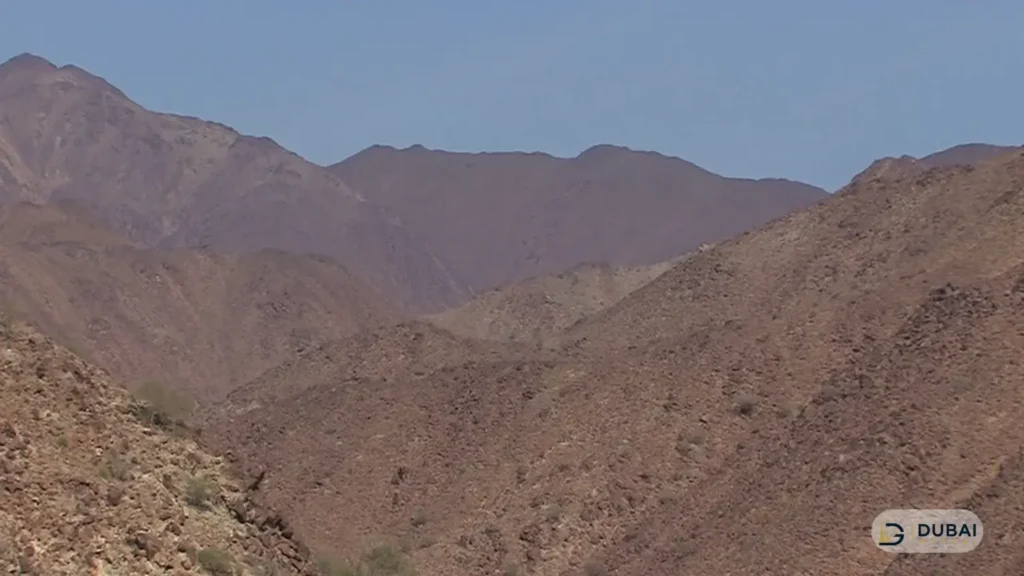
Wadi Al Helo at a glance
| Detail | Information |
|---|---|
| Location | Hajar Mountains, eastern Sharjah, off the E102 Sharjah-Kalba Road |
| Distance from Kalba | About 26 km by road, to the southwest |
| Name | “Sweet valley”, after its fresh underground water |
| Entry | No ticket or permit for the village and hill paths |
| Vehicle | Regular car to the village and fort, 4×4 for tracks higher up the valley |
| Facilities | Public toilets beside the mosque, no shops or cafes |
| Camping | Not allowed |
| Heritage status | ISESCO Islamic World Heritage List (2026), UNESCO tentative list (2023) |
| Coordinates | 24.9915, 56.2187 (heritage village) |
| Best months | November to March |
Bronze Age copper mining
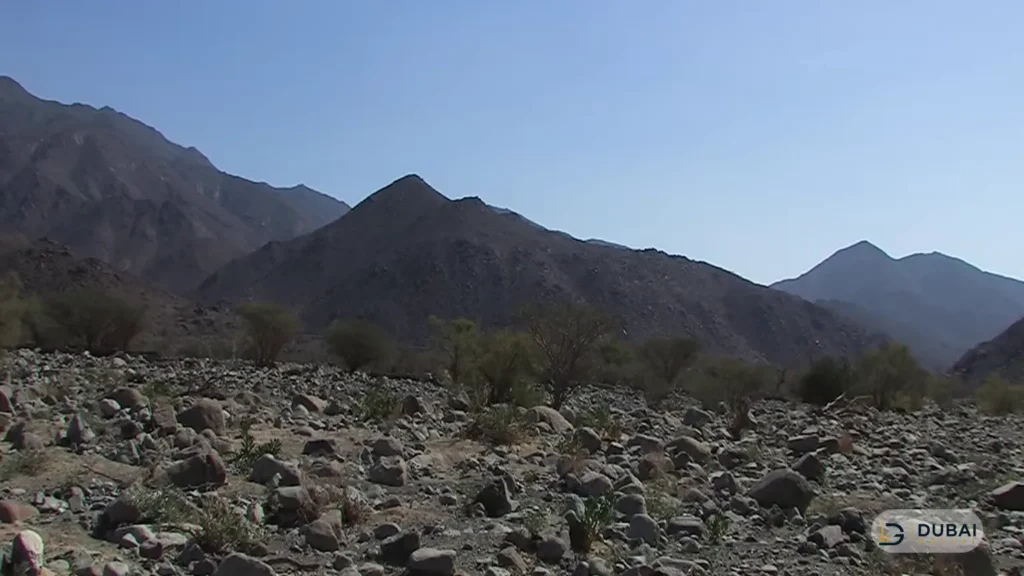
The valley was a copper-mining and smelting centre in the Bronze Age, and the excavated workshop area, known by its research code HLO1, lies in the upper wadi. Excavations there uncovered ore-crushing and sorting areas, furnaces and slag deposits.
The copper cast here was close to 100% pure. The valley was a major supplier of raw copper to Bronze Age sites such as Tell Abraq, Kalba and Umm an-Nar, where it was alloyed with tin. A cuneiform inscription from the Ur III period names Magan as a source of copper, and Magan is identified with northern Oman and the UAE.
The UAE’s UNESCO tentative-list nomination for the valley was submitted on 1 February 2023. It covers about 84 km² under the title Testimony of Bronze Age Copper Production.
How the copper was made
The smelters worked around what the mountains did not offer, and that is what makes the site unusual:
- Open-cast pits replaced tunnels, because the hard ophiolite bedrock is too tough to dig underground.
- Ophiolite crushing stones and anvils broke the ore into pieces, since flint was not available.
- Furnaces were lined with sandy clay and built high on the slope to catch the wind.
- Acacia wood fuelled the furnaces.
- A watchtower at the valley entrance protected the copper.
Rock art & the T-figure
Boulders along the valley carry rock art of boats, the extinct Syrian wild ass and the T-figure, a symbol found across Arabian rock art that is believed to represent a dagger. The carvings mark routes through the mountains toward the coast. The Sharjah Archaeology Authority holds an online petroglyph collection with 129 inscriptions from the valley and 3D models of several sectors.
Remains in the valley run from the Neolithic, carbon-dated to at least 8000 BC, through the Bronze Age, Iron Age, pre-Islamic and Islamic periods.
The 19th-century village & watchtowers
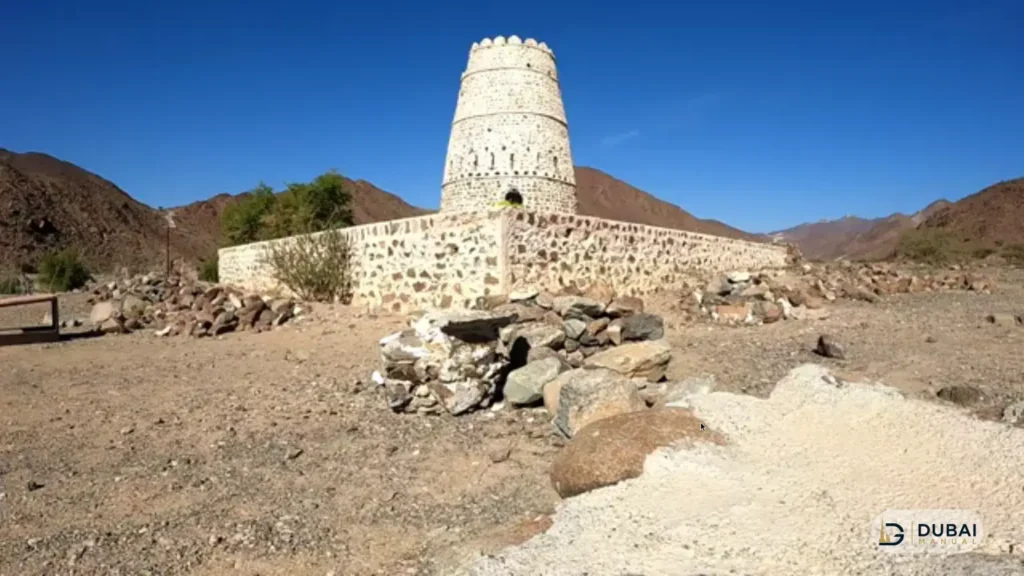
The abandoned village north of the modern settlement was a tobacco-farming community that emptied in or around the 1930s. The valley is traditionally home to the Mazari tribe, and the upper wadi is still dotted with hundreds of abandoned stone-lined tobacco plots. Villagers from Hayl came each season for the harvest, and the crop was sold to traders in Fujairah and Sharjah.
What to look for on foot:
- The house of Eisa Al Thabbahi, an unusually large and sophisticated farmhouse that shows how wealthy the community was.
- A main house with a courtyard and staircase, surrounded by about twenty other houses, stores, tobacco-drying rooms, wells and cemeteries.
- The restored mosque, roughly 120 years old, with the public toilets beside it.
- Three watchtowers that guarded the valley, reached by the path up the hill behind the village.
- A reconstructed Bronze Age tomb beside the village fort.
How to get to Wadi Al Helo
Drive the E102 toward Kalba, then follow the signs for the archaeological site at Wadi Helo village.
- Leave Sharjah city on the E102 Sharjah-Kalba Road. The drive to Kalba takes about 60 minutes, and Wadi Al Helo is roughly 26 km before Kalba on the highway that opened in October 2020.
- Turn off at Wadi Helo village and follow the heritage-site signs, or enter 24.9915, 56.2187 in your map app.
- Park near the village fort. The track is firm gravel and a regular car handles it.
- Walk from there. A 4×4 only matters for the rougher tracks higher up the valley.
Without a car, Wadi Al Helo appears as one stop on full-day desert and mountain tours from Dubai.
Hiking routes
Fort to watchtower hill
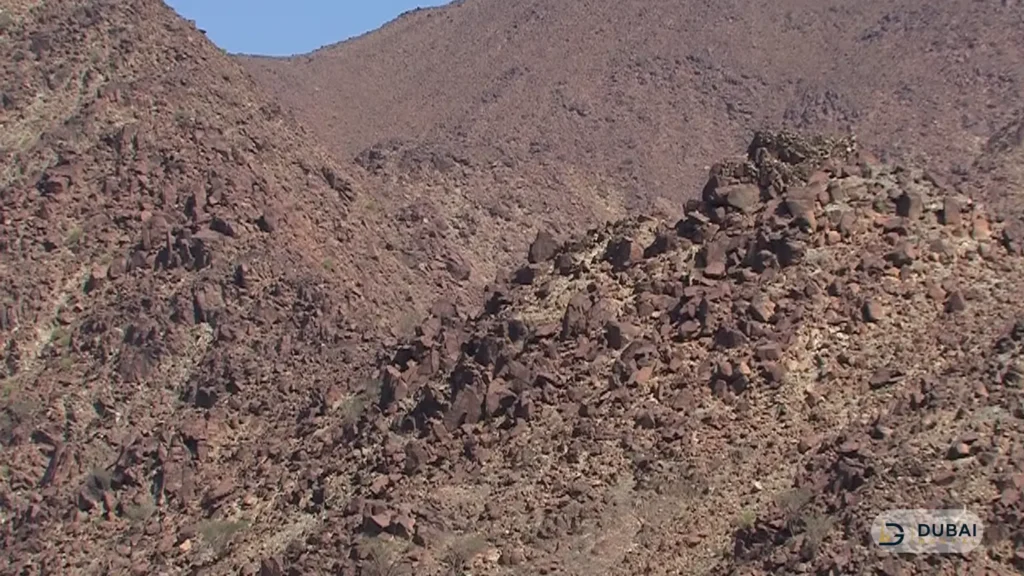
The most popular walk climbs from the old fort to the watchtower, about 1 km and around an hour. The path is steep and slippery in places, so wear shoes with real grip. From the top the view runs 360 degrees over the valley, the farms and the Hajar range.
Valley walk with children
Starting at the fort, the walk along the valley floor suits young children. Guided hikes are available for families who want help with navigation and the history.
Longer ridge & wadi routes
Animal tracks and ridge paths lead deeper into the wadi beyond the watchtowers. These routes have almost no shade, so carry more water than a 1 km walk would suggest.
Wildlife & landscape
A nature reserve of about 3 km² protects the valley. It holds roughly 200 plant species, about 140 of them wild, along with birds, reptiles, rodents and freshwater fish.
Fresh underground water gives the valley its name. The watercourse is seasonal today and no longer flows for months at a time. Farms still grow dates, fruit and fodder, and desert flowers bloom along the paths after rain.
Safety & visitor rules
- Stay out of the wadi during and after heavy rain. A flash flood in 2020 swept cars away and killed several people, including two children, and some of the cars were on farm roads that cross the wadi bed.
- Leave at once if you hear water rumbling from the mountains, even under a clear sky.
- Do not camp. Overnight camping is not allowed in the valley.
- Bring all the water you need. There are no shops or cafes.
- Wear sturdy shoes and sun protection.
- Do not walk into private farms uninvited.
- Dress modestly.
- Leave stones, pottery and rock-art boulders where they lie. The site is protected under Law No. 4 of 2020 on Sharjah Cultural Heritage.
Best time to visit
November to March suits a full hike. From June to September, start at sunrise and finish by mid-morning, because the paths are exposed and the valley holds heat.
Nearby stops
- Awhala Fort is the closest historic site to the village, and the wadi passes beside it before crossing the Omani border.
- Kalba has the Khor Kalba Mangrove Centre, the Kalba Birds of Prey Centre and Al Hefaiyah Mountain Conservation Centre, which is home to over 30 mountain species.
- Khorfakkan Beach on the east coast is a free public beach for the end of the day.
- The 1.8 km Wadi Shees trail loops through palm groves and falaj channels in 30 to 40 minutes.
FAQ
Is Wadi Al Helo free to visit?
Yes. There is no ticket office, and walking the heritage village and hill paths needs no permit.
Do you need a 4×4 for Wadi Al Helo?
No. A regular car reaches the village, the fort and the parking area on a firm gravel road. A 4×4 only matters for the rougher tracks higher up the valley.
Can you camp at Wadi Al Helo?
No. Overnight camping is not allowed in the valley, and camping in any wadi is unsafe when rain falls in the mountains.
What does Wadi Al Helo mean?
Helo means sweet, so the name translates as sweet valley. It refers to the fresh underground water that made the valley fertile for dates, fruit and fodder.
Is Wadi Al Helo a UNESCO World Heritage Site?
Not yet. It was submitted to UNESCO’s tentative list on 1 February 2023 as Testimony of Bronze Age Copper Production. ISESCO inscribed it on the Islamic World Heritage List in February 2026.
How long does a visit to Wadi Al Helo take?
A couple of hours covers the village ruins and the walk up to the watchtower. Add time for a longer ridge route or a stop at Awhala Fort.
Are there shops or food at Wadi Al Helo?
No. There are no shops or cafes, only public toilets beside the mosque, so bring food and water.
Before you go
- Check the Hajar Mountains forecast and skip the trip if rain is expected.
- Fill the fuel tank and pack water and food before leaving the E102.
- Park at the fort and walk the 1 km watchtower hill first.
- Add Awhala Fort or a Kalba stop if time allows.