Fossil Rock: How to Visit, Hike, and Explore Sharjah’s Desert Landmark
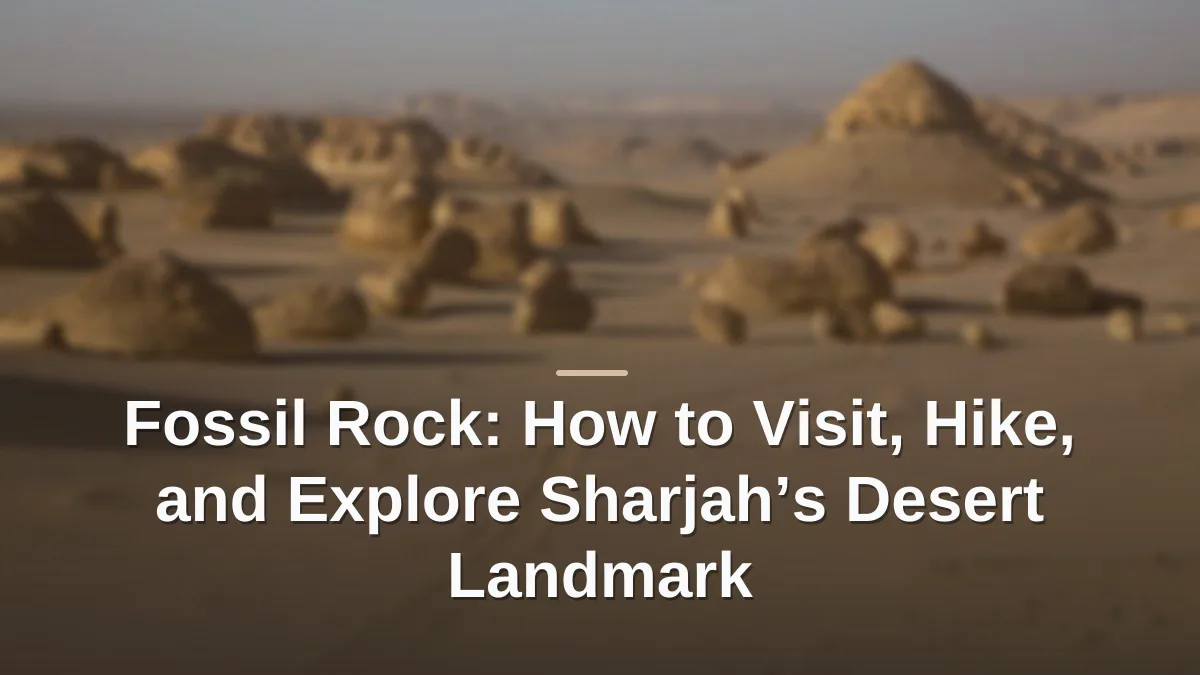
Fossil Rock in Sharjah’s Mleiha region is a protected desert site with marine fossils in weathered limestone, a ridge-and-dune landscape, and a challenging hiking route. Plan around vehicle access, footwear, the season, and whether you want a self-drive stop or a guided outing from the Mleiha Archaeological Centre.
Fossil Rock visit essentials
| Category | Feature / Parameter | Details & Visitor Guidelines |
|---|---|---|
| Site Overview | Location & Region | Mleiha, Sharjah, UAE (also known as Jebel Maleihah) |
| Conservation Status | Mleiha National Park (Managed by Shurooq) | |
| Visitor & Welcome Hub | Mleiha Archaeological Centre | |
| Road Access | Sharjah–Kalba Road (E102) | |
| Geology & Landscape | Landscape Profile | Weathered limestone outcrop, red sand dunes, and surrounding desert plains |
| Primary Natural Feature | Abundant marine fossil beds embedded throughout limestone rock faces | |
| Fossil Age | 80+ million years old (Late Cretaceous period, originating from the ancient Tethys Ocean) | |
| Trail Specifications | Hiking Distance | 5.5 km (3.4 miles) circuit |
| Trail Grade / Difficulty | Moderate to Hard (requires loose rock scrambling and steady footing) | |
| Recommended Footwear | Sturdy hiking boots or high-grip trail shoes with ankle support | |
| Visitor Practicalities | Vehicle Requirement | 4WD / 4×4 recommended for off-road sand driving near the base (2WD suitable only up to paved perimeter spots) |
| Ideal Visiting Season | October through April (cooler winter conditions) | |
| Best Timing of Day | Early morning (for cooler climbs) or late afternoon (golden hour and sunset panoramas) | |
| Water & Hydration | Minimum 2–3 litres per person; zero shaded facilities along the trail |
Fossil Rock overview
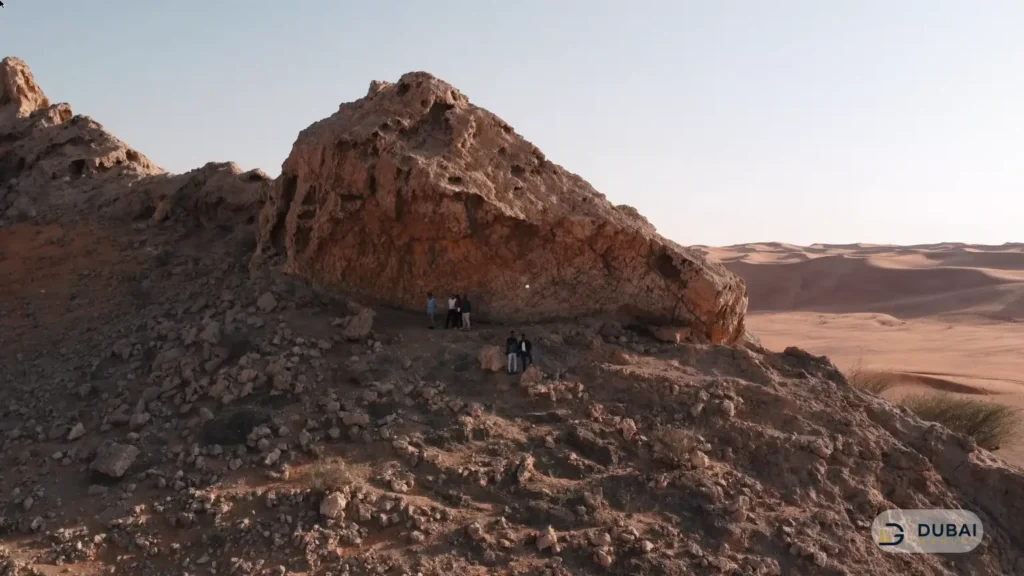
Fossil Rock is a desert formation in Sharjah’s Mleiha region where ancient marine fossils are still visible in limestone that once sat under the sea. The site sits inside a protected park landscape, so access and route planning matter as much as the geology. Most visitors come for the ridge views, the scramble, or a guided desert outing that starts at the Mleiha Archaeological Centre.
How to reach Fossil Rock
The easiest way to plan the trip is to set your GPS to the Mleiha Archaeological Centre first, then continue toward the rock from there. The main approach uses E102, also called the Sharjah-Kalba Road, and the drive from Sharjah city usually takes about an hour. From Dubai or Sharjah city, the total drive is generally around 60 to 75 minutes depending on traffic and your exact starting point.
- Drive toward the Mleiha region using E102.
- Use the Mleiha Archaeological Centre as your first navigation target.
- Continue only if your vehicle can handle soft sand approaches.
- Use a 4WD vehicle for off-road tracks near the base formations.
- Lower tyre pressure only if you already know how to do so safely for sand driving.
The safest plan is to stop at the visitor centre first and avoid the soft-sand sections unless you have the right vehicle and desert-driving experience. Guided transfers and organised tours are the easier option when you want to avoid route risk.
Fossil Rock sits in the same desert area that many people use as a base for a wider Mleiha trip, so it helps to think beyond the landmark itself when planning the drive. The route, fuel stops and time needed can change depending on whether you are making Fossil Rock a quick detour or combining it with other stops in the area. A broader Mleiha visitor guide helps you map that out alongside the main landmark.
What the hike is like
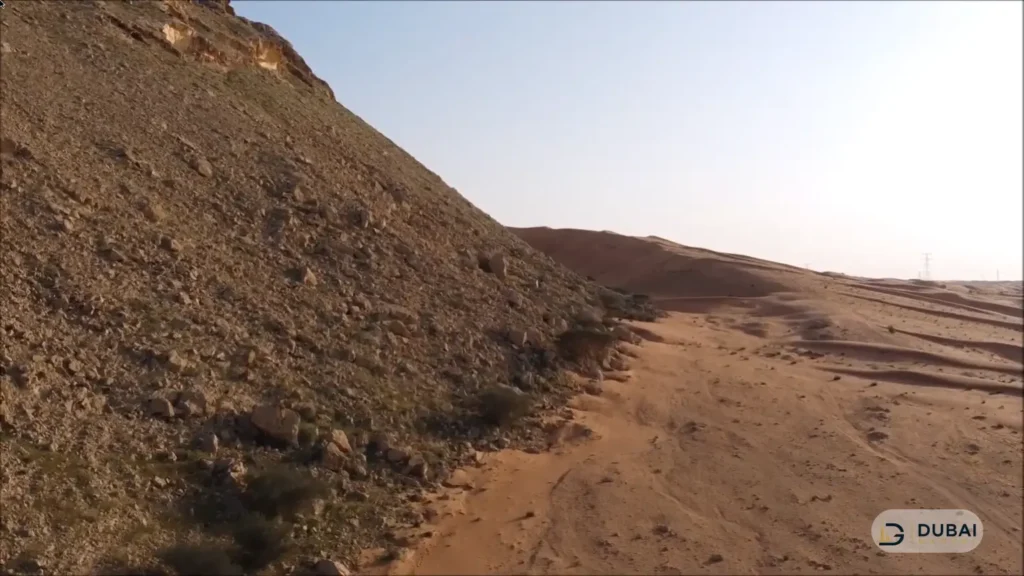
The main trail is about 3.4 miles, or 5.5 kilometres, and it is best treated as a moderate-to-hard desert hike. The route includes loose rock, steep sand climbs, and a rocky scramble near the ridge, with one brief steep rock-climbing section that slows most groups down. There is no shade along the trail, so sun exposure and water carry are major parts of the effort.
- Terrain: loose gravel, sand slopes, and exposed limestone.
- Difficulty: moderate to hard, especially in heat.
- Notable feature: a short steep scramble near the ridge.
- Views: red dunes, rugged hills, and fossil-bearing rock faces.
- Footwear: sturdy hiking shoes or boots are essential.
This is not a casual flat walk. The trail suits hikers who are comfortable on uneven ground and who can pace themselves in dry desert conditions. If you are visiting with children or less experienced walkers, the safer plan is to shorten the hike and focus on the accessible viewing areas.
Rules, safety & best timing
Fossil Rock sits within Mleiha National Park, a protected area managed by Shurooq, so visitors should stay on allowed routes and leave fossils in place. The area is regulated to protect the landscape and its fossil features.
- Best season: October through April.
- Best time of day: early morning; sunset.
- Water: carry at least 2 to 3 liters per person.
- Sun protection: bring a hat, sunscreen, and sunglasses.
- Access rule: stay out of fenced and protected zones.
- Fossil rule: do not remove or damage fossils.
Heat is the main safety issue outside the cooler months, and the lack of shade makes timing more important than distance alone. In practical terms, the site is much more comfortable and manageable in the cooler half of the year, especially if you want to hike rather than only view the rock from a vehicle stop.
Tours, camping & activities
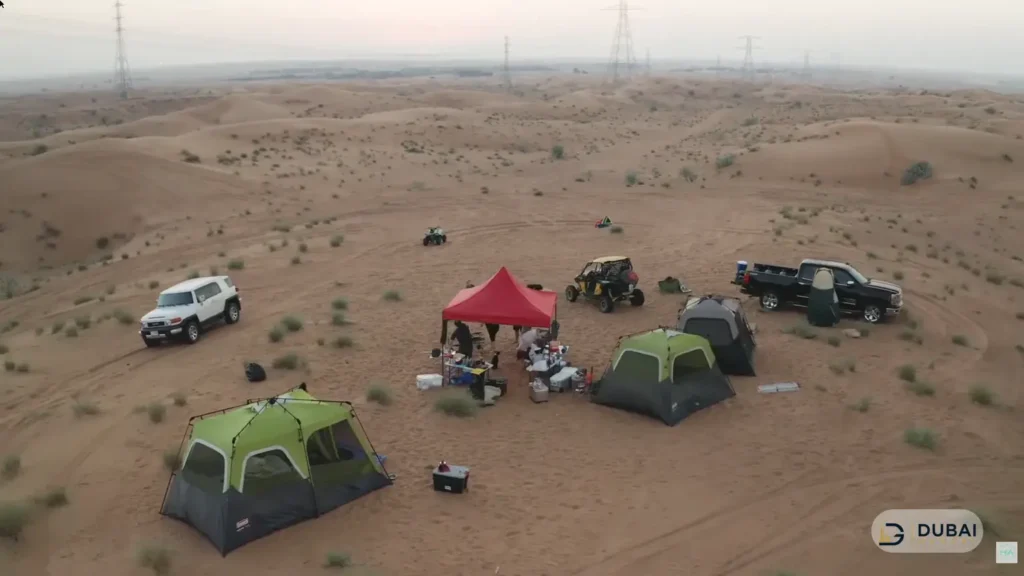
Many visitors choose a guided experience because it handles access, context, and vehicle logistics in one booking. Mleiha Archaeological Centre is the main official starting point for visitor services and tours, and bookable desert experiences include guided off-road excursions, fossil discovery sessions, safaris, and packaged adventures.
- Guided tours: USD 29 to 126.
- Guided treks: AED 125 to AED 190 per person.
- Dune buggy experiences: starting at AED 1,200.
- Common activities: hiking, trekking, dune driving, camping, sandboarding, and stargazing.
If you want the geology and archaeology explained properly, a guided tour is the best fit. If your goal is mostly photography, sunset views, or a short desert outing, a booked package can be easier than self-driving because it reduces route uncertainty and sand-driving risk.
Many visitors fold Fossil Rock into a longer Sharjah desert loop when they want a mix of scenery, photography and another stop with a different feel. Nearby heritage sites fit naturally into the same day, especially if the route already takes you through quiet desert roads and open landscapes. One of the most distinctive stops is Al Madam Buried Village, which adds a very different historical layer to the trip.
What to bring
A Fossil Rock visit is much easier when you pack for heat, loose terrain, and long periods away from services. The essentials are basic: sturdy hiking shoes or boots, 2 to 3 liters of water per person, sun protection, light clothing, and offline maps.
- Sturdy hiking shoes or boots
- 2 to 3 liters of water per person
- Hat
- Sunscreen
- Sunglasses
- Light, breathable clothing
- Fully charged phone with offline maps
- Snacks for longer visits
- 4WD recovery gear if you are self-driving off-road
If you are planning to hike, footwear and water are the two non-negotiables. For a driving-only stop, the same list still applies because the heat and dust can be intense even without a full trail attempt.
FAQ
Is Fossil Rock the same as Jebel Maleihah?
Yes. Jebel Maleihah is the local name for Fossil Rock in the Mleiha region of Sharjah.
Do you need a 4WD vehicle to visit Fossil Rock?
A 4WD vehicle is recommended and often required for the soft-sand approaches near the base formations. Self-driving in a regular car is a poor choice once the route moves off paved or firm tracks.
How hard is the hike?
The trail is moderate to hard because of loose rocks, sand climbs, and a rocky scramble near the ridge. It is manageable for fit walkers who bring proper shoes and enough water.
Can you collect fossils at Fossil Rock?
No. Fossils are protected, and you should not remove, chip, or collect them. The site is part of a regulated desert landscape, so the correct approach is to observe and photograph only.
What is the best time to visit Fossil Rock?
October to April is the most comfortable window, and early morning or sunset gives the best light and lower heat.
Where should I start the trip?
Set your GPS to the Mleiha Archaeological Centre first. It is the main visitor and booking hub for Fossil Rock.
If you’re starting from Sharjah, think about how much time you want to spend on the road before heading into the desert. Some travelers also like to spend a little time in the city first, especially if they’re planning museums, heritage areas or a meal stop before driving out. A Sharjah city guide can help you decide whether to begin in the city or make Fossil Rock the first stop on a longer day trip.
Are there guided tours available?
Yes. Guided treks, desert safaris, fossil discovery sessions, and packaged experiences are available through the visitor centre and bookable desert providers. Guided options are especially useful if you want background on the fossils and the wider Mleiha landscape.
Is Fossil Rock inside a protected park?
Yes. It sits within Mleiha National Park, and visitors should stick to allowed routes and access points.
Conclusion
Fossil Rock is best visited as a planned desert outing, not a casual roadside stop. If you go with the right vehicle, proper footwear, enough water, and a cooler-season schedule, the site delivers one of the UAE’s most memorable fossil-and-landscape experiences.