
Al Madam Buried Village: Why It Was Abandoned and How to Visit
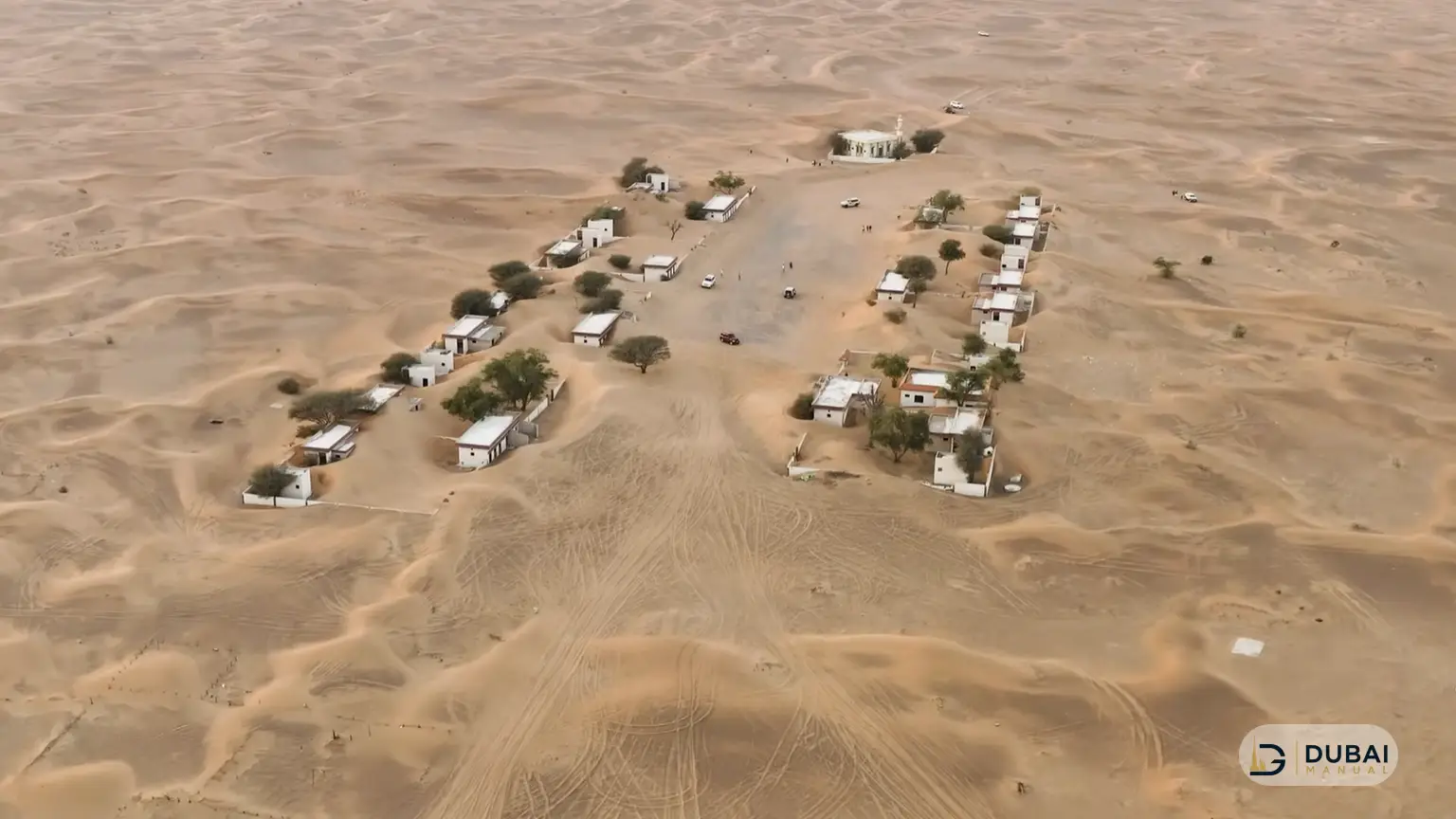
Al Madam Buried Village in Sharjah is one of the UAE’s most striking abandoned places. The small settlement sits partly swallowed by desert sand in the Al Madam area, about 30 km west of the Oman border. Most people go for the atmosphere, the old houses and the sharp contrast between the village and the dunes. The main planning points are simple: how to get there, when to go and how close you want to drive on the sand.
Al Madam’s essential details
| Detail | Information |
|---|---|
| Location | Al Madam area, Sharjah, UAE |
| Coordinates | 24.96139°N, 55.79028°E |
| Access road | E44 Dubai-Hatta Highway |
| Border context | ~30 km west of Oman border |
| Entrance fee | Free, 0 AED |
| Opening window | 24/7, daylight hours |
| Recommended visiting time | 06:00–09:00 or 16:00–18:30 |
| Best season | November–March, 18°C–28°C |
| Parking | Informal dirt lot outside perimeter |
| Regular car access | Paved highway to desert fringe |
| 4×4 access | Useful for final 200–500 m dunes |
| Public transport | No direct service; taxi needed |
| On-site essentials | 2 L water, SPF 50, closed-toe shoes |
What Al Madam Buried Village Is
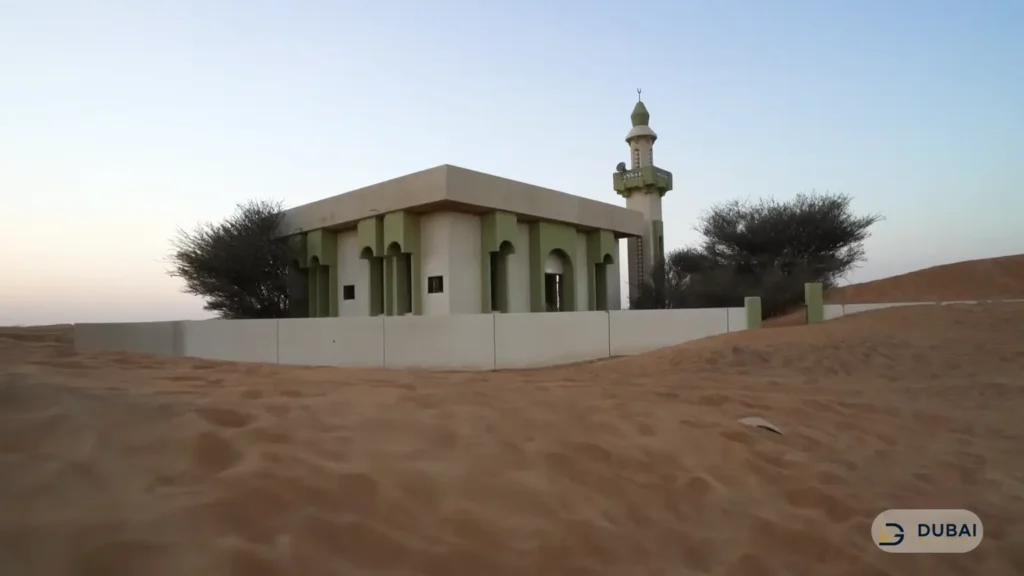
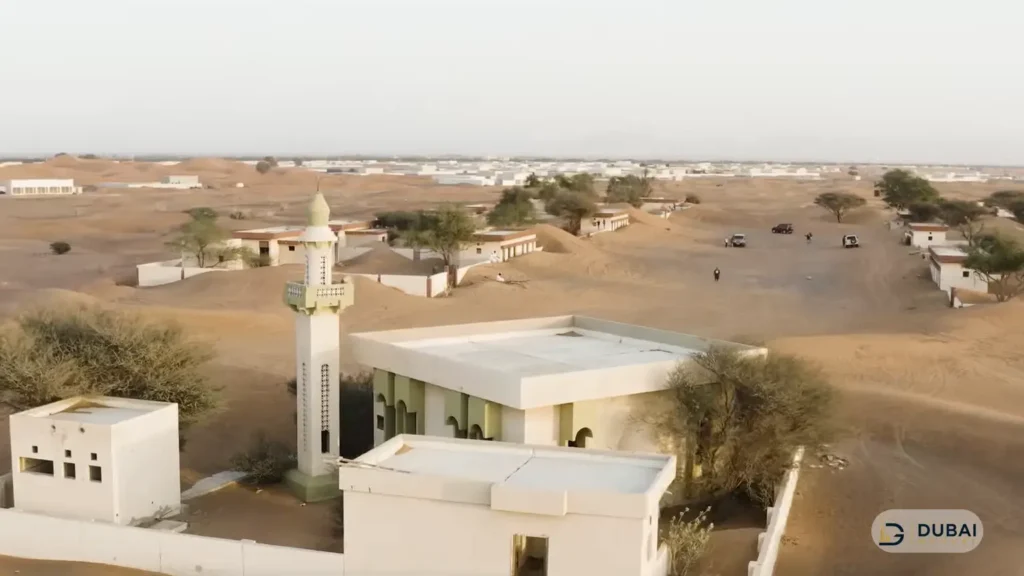
Al Madam Buried Village is a small abandoned cluster of houses and a mosque in Sharjah. It is also known as Madam Old Town and Al Madam Ghost Town. Built in the 1970s as public housing for members of a Bedouin tribe, it was later left behind and slowly covered by sand. The site is known for the way the dunes press into the rooms and walls, leaving the settlement half between village and desert.
The village is in the Al Madam area of Sharjah, about 30 km west of the Oman border, along the E44 Dubai-Hatta Highway. There is no ticketed entrance or exhibit area. It is simply an open desert site with a strong visual identity, which is why photographers and day-trippers often stop here.
Why The Village Was Abandoned
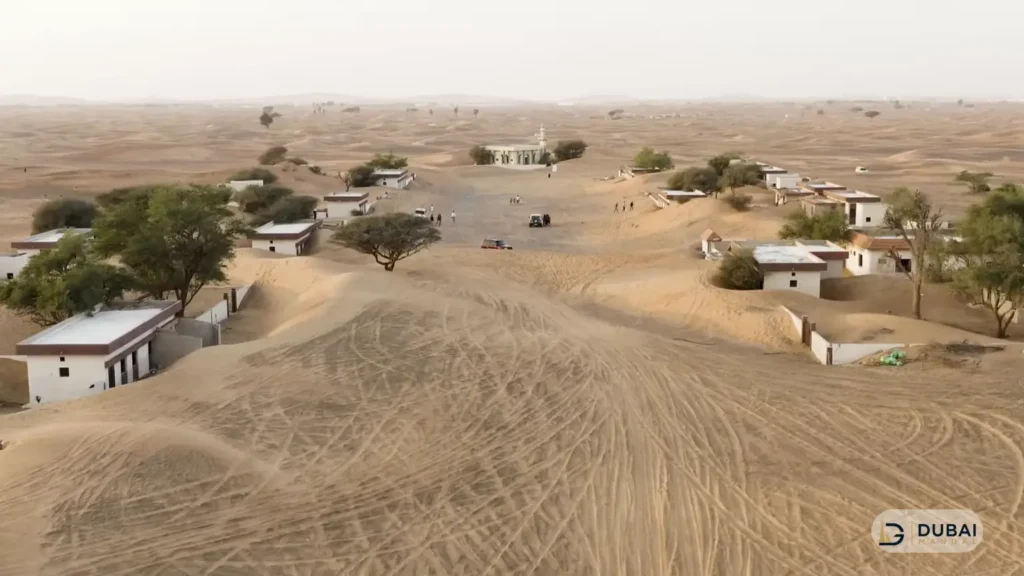
Desertification and dune movement are the most common explanations. Sand kept shifting across the settlement, making daily life harder and eventually pushing the village into decline. Living with desert winds and long commutes also became less workable over time.
By 2020, the village had been abandoned for a few decades. It was built after the 1971 formation of the United Arab Emirates, but the changing desert environment overtook the original housing project. That is what created the half-buried look visitors see today.
What You Will See There
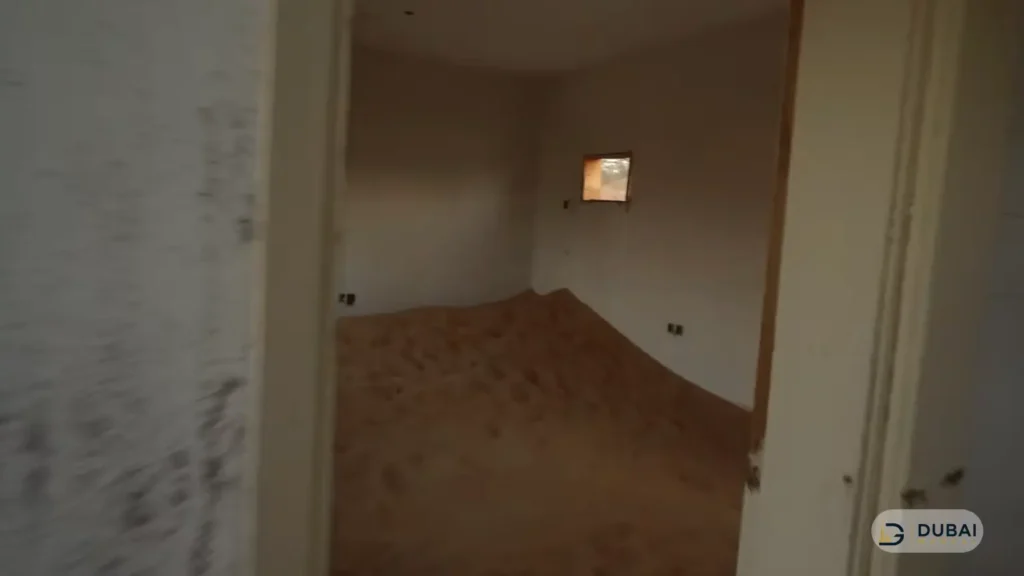
- Two rows of abandoned houses in a compact layout.
- A single mosque with a tattered green carpet inside.
- Rooms with interior paint in blue, green and yellow.
- Homes with mosaic details and wallpaper landscape designs.
- Walls and doorways partly filled by sand.
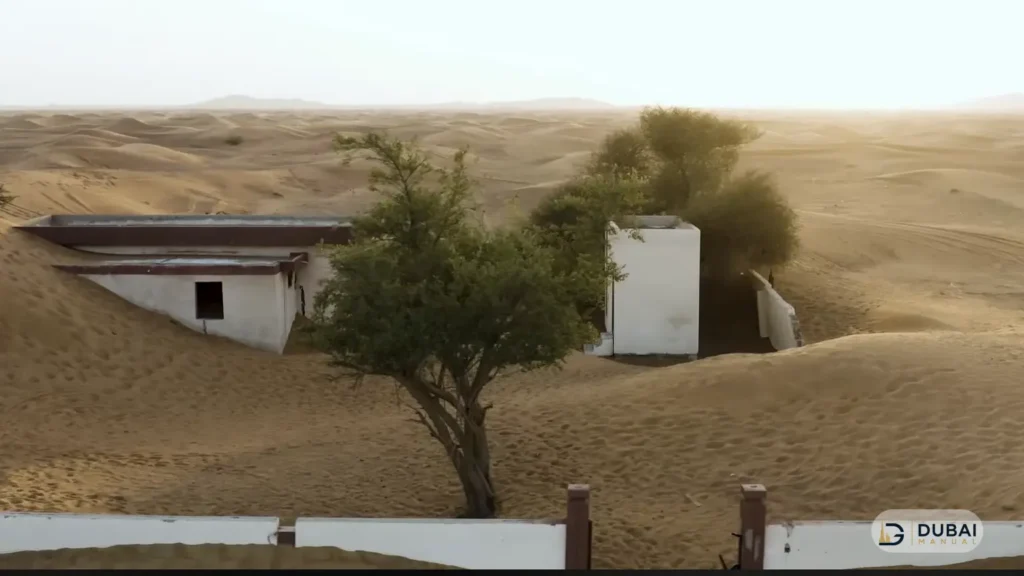
- A quiet desert atmosphere with little shade or shelter.
The site is small, so the visit is more about slow observation than covering ground. The strongest details are inside the rooms, where old decoration still shows against the sand outside. Because the settlement is compact, the mood changes quickly as you move from the outer edge into the buried sections.
How To Get There
The simplest route is by road on the E44 Dubai-Hatta Highway. There is no direct public transport to the site, so you need a private car or taxi.
- Drive a regular car if you want the easiest approach and plan to stop at the paved highway edge and informal dirt parking area outside the perimeter.
- Use a 4×4 or SUV if you want to drive closer through the final 200-500 m of dunes near the village.
- Take a taxi if you want point-to-point transport without driving yourself.
- Book a guided desert tour if you want a driver, route planning and extra desert activities in one trip.
Regular cars can reach the paved highway to the desert fringe, but they should not be taken onto soft sand. If you use a taxi, agree a wait-and-return fare before you leave, since taxis are not available on site for the return trip.
Getting to Al Madam also shows how much distance, road access and surrounding landscape shape a trip in the UAE. The same kind of location awareness matters in Sonapur Dubai location, where knowing exactly where a place sits is part of understanding the journey.
Fees, Hours, And Rules
- Entrance is free, with no admission charge.
- The site is best visited during daylight hours, especially 06:00-09:00 or 16:00-18:30.
- Photography is common, but the site should still be treated as an abandoned place, not a playground.
- Sturdy closed-toe shoes, sunscreen and water are essential.
Open access does not mean comfort or safety at any hour. The desert setting gets much harsher after dark, so a daytime visit is the safer choice. Keep the stop short and leave before the heat and low light become a problem.
Al Madam sits in Sharjah, so many people combine a desert stop with a city visit on the same day. That means checking opening times, dressing modestly and leaving enough time for the drive back, especially if a mosque visit is part of the route. The same timing and etiquette questions come up at Sharjah mosque visiting hours.
Best Time To Visit Safely
The best season is November, March, when temperatures usually sit between 18°C and 28°C. Summer is a poor choice because the heat is extreme and the site has very little natural shelter. Daylight hours are the safest and most pleasant time to go.
Morning and late-afternoon visits give you better light and less heat stress. That matters here, where you may be walking on sand and standing in direct sun with very little shade. If you want the best mix of comfort and visibility, plan a short daytime stop in the cooler months.
What To Pack Before You Go
- 2 L water
- SPF 50 sunscreen
- Closed-toe shoes
- Light clothing that still covers and protects
- Phone or camera for photos
- Cash or card for any taxi or tour expenses
Water matters most because the site is exposed and there are no services on the village itself. Closed-toe shoes help with hot ground, uneven sand and loose debris around the ruins. If you are going by taxi or tour, confirm the transport details before you arrive so you are not left waiting in the desert.
FAQ
Is Al Madam Buried Village free to visit?
Yes, entrance is free, with no admission charge.
Can I visit in a regular car?
Yes. A regular car can reach the paved highway to the desert fringe and the informal dirt lot outside the perimeter. Do not drive onto the soft sand unless you have the right vehicle and experience for it.
Do I need a 4×4?
You do not need a 4×4 for the accessible approach. A 4×4 helps if you want to drive closer through the sand.
What is the best time of day to go?
Best time of day: 06:00-09:00 or 16:00-18:30
Is there public transport to the site?
No, there is no direct public transport to Al Madam Buried Village.
What should I wear?
Closed-toe shoes are the most important choice, since the ground can be sandy, uneven and hot. Bring 2 L of water and SPF 50, along with light, sun-protective clothing.
Before You Visit
Al Madam Buried Village is worth a short stop if you want an atmospheric desert visit in Sharjah. Go in daylight, use the road approach rather than soft sand unless you have the right vehicle, and bring the basics for heat and sun. The experience is strongest in the cooler months, when the village is easier to enjoy without rushing.




3 Comments
Comments are closed.