Iconic Landmarks Around the World: Scale, History & What Earns the Title

Some places need no introduction. A silhouette on a postcard, a skyline photo, or a name dropped in conversation is enough for most readers to picture them. That instant recognition is the real test of an iconic landmark. It is not size alone, age alone, or beauty alone. It is the combination of a clear shape, a story people already half know, and a visit that still surprises them in person.
This guide sorts the best-known landmarks by what actually makes each one worth a place on a shortlist. It gives the scale, the history, and the practical difference between them, so a first-time visitor can choose with a reason, not just a famous name.
Iconic landmarks quick details
| Landmark | Place | Why it stands out | Scale to know |
|---|---|---|---|
| Pyramids of Giza | Egypt | The only ancient wonder still standing | Over 4,500 years old |
| Great Wall of China | China | A defensive line stretched across mountains and desert | Over 21,000 kilometres across all sections |
| Colosseum | Rome, Italy | A Roman arena built for crowds on a city scale | Up to 50,000 spectators |
| Eiffel Tower | Paris, France | An iron tower that became a city symbol | About 7 million visitors a year |
| Statue of Liberty | New York, United States | A gift from France that became a symbol of arrival | Standing in New York Harbor since 1886 |
| Taj Mahal | Agra, India | A marble mausoleum built for a Mughal emperor’s wife | About 8 million visitors a year |
| Machu Picchu | Peru | A stone city set high in the Andes | Nearly 8,000 feet above sea level |
| Angkor Wat | Siem Reap, Cambodia | The largest religious monument in the world | Over 162 hectares |
| Sydney Opera House | Sydney, Australia | A harbour landmark shaped like sails | Over 1,800 performances a year |
| Burj Khalifa | Dubai, United Arab Emirates | The tallest building in the world | 828 metres tall |
Ancient landmarks that still set the standard
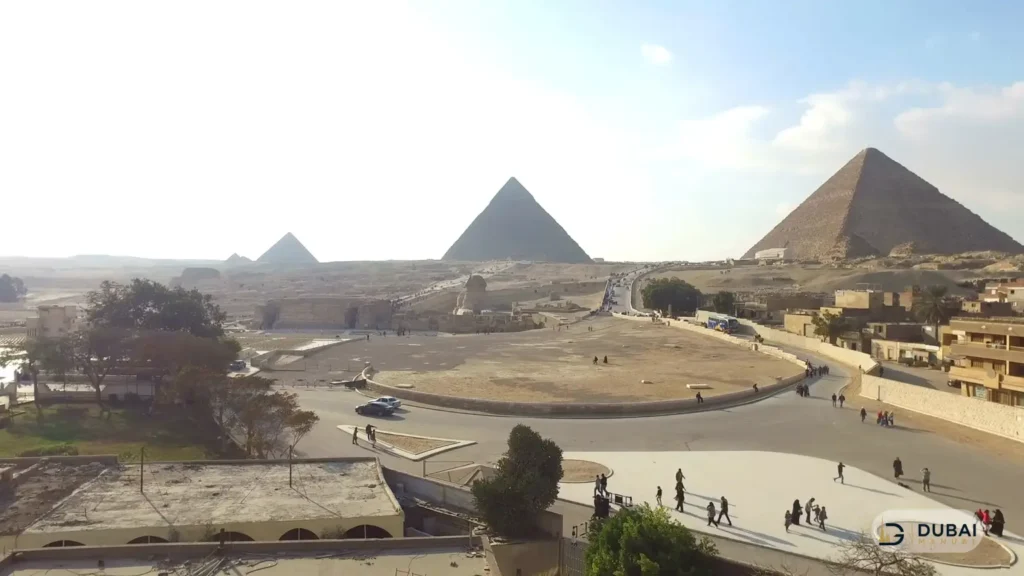
The Pyramids of Giza are the oldest names on this list by a wide margin. They have stood for over 4,500 years, and they are the only ancient wonder of the world still in existence. Their appeal is not a single detail. It is the sheer fact that stone structures on this scale survived at all, in a desert setting that leaves nothing to hide behind.
The Colosseum works on a different scale. Construction began in 70 to 72 AD and finished in 80 AD, and the arena could hold up to 50,000 spectators. A visitor today walks a building designed for crowd movement, seating tiers, and staged events. The ruin still reads as a working venue, which is why it photographs well from every angle and still fills first-time itineraries in Rome.
The Great Wall of China is the hardest landmark on this list to grasp in one visit. Its total length runs over 21,000 kilometres across all branches and sections, and the best-known sections date from the Ming Dynasty. No single viewpoint shows the whole structure. A good visit picks one restored section, walks it at a steady pace, and treats the wall as a route through mountain terrain rather than a single monument to tick off.
Machu Picchu sits at nearly 8,000 feet above sea level, and that altitude shapes the visit as much as the stonework does. The site rewards a slow first hour: the layout, the terraces, and the mountain backdrop only make sense when the body has adjusted and the crowds have spread out across the site. Angkor Wat makes the opposite point. At over 162 hectares, it is the largest religious monument in the world, and it appears on the Cambodian national flag. Its size means a visit is a half-day commitment at minimum, not a quick photo stop.
Modern landmarks built to be recognised
The Eiffel Tower draws about 7 million visitors a year, and it has three levels open to visitors. After dark, it sparkles for five minutes every hour. That nightly detail matters for planning: an evening visit gives a different landmark from a daytime one, with the tower itself as the light show rather than just a viewpoint.

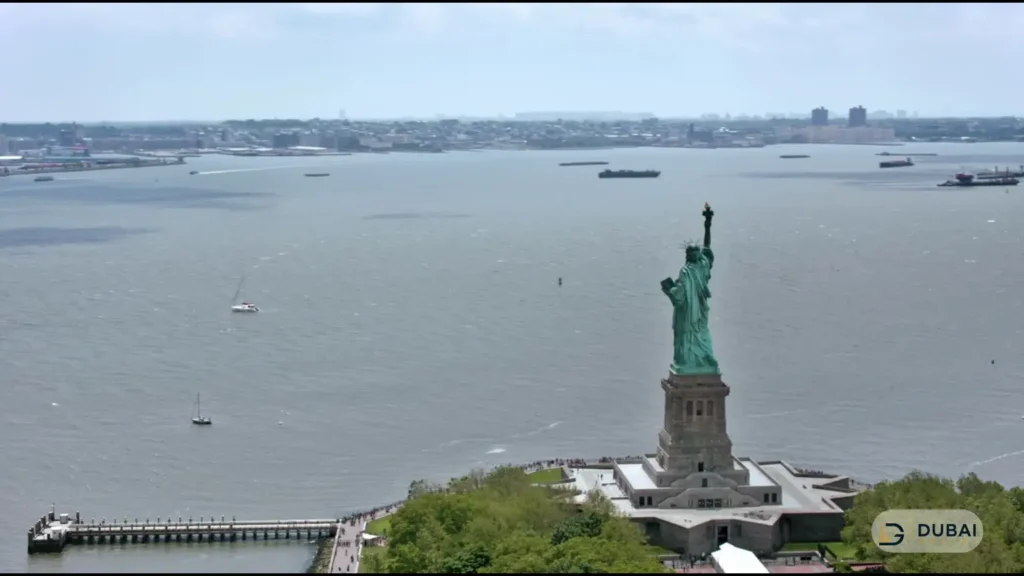
The Statue of Liberty was a gift from France to the United States, and it has stood in New York Harbor since 1886. Its power comes from its position. It was built to be seen from the water, on arrival, and that first view from a ferry still carries more weight than any close-up of the statue itself.
The Sydney Opera House sits at Bennelong Point on Sydney Harbour. It was designed by Jorn Utzon, it holds UNESCO World Heritage status, and it hosts over 1,800 performances a year. Unlike most landmarks on this list, it is a working venue first and a photo subject second. A performance inside it, or even a guided tour of its halls, changes it from a shape on the harbour into a place with a daily purpose.
Brandenburg Gate stands about 85 feet tall in Berlin, and it was restored in 1956. Mont-Saint-Michel dates back to the 10th century and sits on an island in the bay between Brittany and Normandy. Both show how a landmark can gain meaning from what happened around it, not just from how it was built. A gate becomes a symbol of a divided city and its reunion. An island abbey becomes a place shaped by tides, stone, and centuries of pilgrimage.
Landmarks in the UAE that belong on a world list
Dubai and Abu Dhabi already hold two entries that sit comfortably beside the global names above. Burj Khalifa stands at 828 metres, with an observation deck at Level 148. It is the tallest building in the world, and its height alone puts it in a category no older landmark can match. The practical difference is vertical: older landmarks impress by age or footprint, while Burj Khalifa impresses by the view from a single high floor.
Sheikh Zayed Grand Mosque in Abu Dhabi takes the opposite approach. General admission is free, and it is open seven days a week, subject to Friday prayer adjustments. Its scale comes from white marble, courtyards, and prayer halls built for large numbers of visitors at once. For a reader based in the UAE, these two landmarks also solve a planning problem: they give a world-class visit without a flight, and they pair well with a longer trip that adds one or two global names from the sections above.

How to choose which landmark to visit first
Start with the type of visit, not the ranking. A first-time traveller who wants a single strong image should pick a landmark with a clear silhouette and a short, well-marked route to its best viewpoint. The Eiffel Tower, the Statue of Liberty, and Burj Khalifa all fit that test.
A traveller who wants history over views should pick an ancient site and give it time. The Colosseum, the Pyramids of Giza, and Angkor Wat all reward a slower visit, because their scale only becomes clear on foot. A traveller with limited mobility or limited time should check the walking distance before choosing: the Great Wall and Machu Picchu both involve steep ground and altitude, while the Sydney Opera House and Sheikh Zayed Grand Mosque are easier to cover in a single unhurried visit.
Crowds are the other filter. The most-visited landmarks on this list draw millions of visitors a year, so an early start or a weekday visit changes the experience more than any ticket upgrade. A landmark seen in a quiet first hour feels larger, older, and more personal than the same landmark seen in a midday queue.
Frequently asked questions
Which iconic landmark draws the most visitors each year?
The Pyramids of Giza are reported at about 14 million visitors a year in the research for this guide, ahead of the Colosseum at about 12 million and the Great Wall of China at about 10 million. Visitor totals shift from year to year, so treat these figures as a ranking guide, not a fixed count.
Why is the Great Wall of China so long?
The Great Wall is not one wall built in one period. It is a network of walls, branches, and sections built and rebuilt over centuries, which is why its total length runs over 21,000 kilometres. The best-known sections date from the Ming Dynasty.
Is the Sheikh Zayed Grand Mosque free to enter?
General admission is free. The mosque is open seven days a week, subject to Friday prayer adjustments, which makes it one of the most accessible major landmarks in the UAE.
What makes Burj Khalifa different from older landmarks?
Burj Khalifa competes on height rather than age. At 828 metres, with an observation deck at Level 148, it offers a vertical view that no ancient or 19th-century landmark was built to provide.
Pick one landmark first
A world list is useful only when it narrows to a single next trip. Pick the landmark that matches the kind of day you want: a high viewpoint, a slow walk through ancient stone, or a working venue with a daily programme. Visit that one properly, with time to spare at its best viewpoint, and the rest of the list will still be there for the next trip.